
 Download PDF
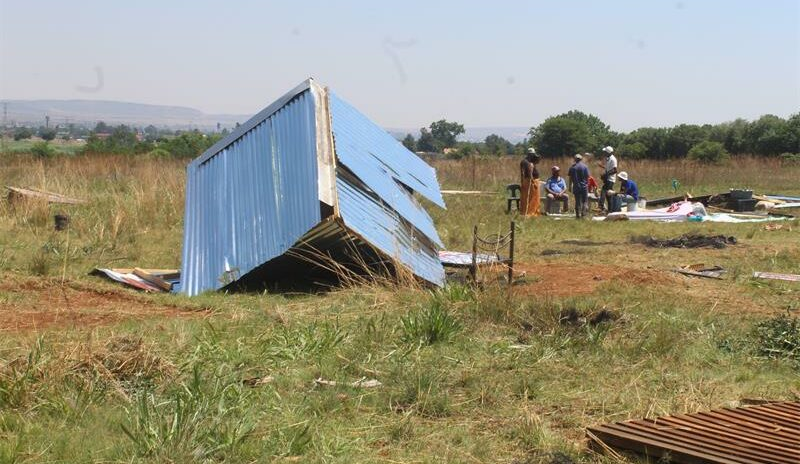
 The community of Eldorado Park, supported by the Gauteng Housing Crisis Committee (GHCC), has taken decisive action by occupying a piece of land that has stood vacant for many years. Over the course of a weekend, residents erected informal structures and brought life to the site, which had long remained unused despite a growing housing crisis in the area. For more than 72 hours, families moved about freely and children played between the makeshift dwellings. What began as an act of survival and community solidarity, however, soon escalated into a confrontation with the South African Police Service (SAPS), the Johannesburg Metropolitan Police Department (JMPD), and Gauteng Traffic Wardens.
According to some residents, the head of SAPS engaged with the GHCC after the occupation began. Community leaders asked that police produce a court order authorising any eviction or demolition of structures. Officers reportedly failed to produce such documentation. This strengthened the community’s resolve to remain on the land, especially as most of the occupants are unemployed, backyard dwellers, single parents, and extended families squeezed into overcrowded yards. Many insist they have nowhere else to go, arguing that they are fighting for the most basic human need: a safe place to live.
Tensions flared when law enforcement officers attempted to demolish the newly erected shacks. Residents say that police did not follow legal procedures, instead called for many other to back them up and tried to forcefully remove people and demolish structures. Witnesses report the use of pepper spray, pushing, and shoving as officers attempted to scatter the community. In response, residents formed a human chain around their homes. Several people say they were pointed at with firearms, despite the presence of women, children, and elderly residents.
“It was like they didn’t see us as human,” one young mother said. “We were not even given a chance to explain why we were here.”
The confrontation only eased when the local councillor from the Eldorado Park Municipal Office arrived on the scene. By that point, however, many structures had already been destroyed, leaving families once again without shelter.
Land, Law and a History That Still Shapes the Present
Residents argue that their occupation is not an act of defiance but a response to long-term neglect. South Africa’s housing crisis is deeply rooted in apartheid-era dispossession, when communities classified “Coloured”, including those now living in Eldorado Park, were forcibly removed from areas designated for white occupation. Large portions of well-located land were taken without consent, destroying generational stability and leaving communities trapped in peripheral areas with limited access to land or housing opportunities.
Today, these historical injustices are compounded by severe land shortages. Large tracts of land remain vacant or under-utilised due to disputes between provincial, municipal, and national departments, private ownership complications, or legal barriers that prevent land from being released for public housing. In Johannesburg alone, dozens of parcels of state-owned land lie dormant, even as thousands remain on housing waiting lists for decades. These conditions have fuelled a rise in land occupations, particularly among young families who cannot afford rentals or backyard accommodation.
Eldorado Park itself faces overcrowding, unemployment, and rising poverty. Many residents live with multiple generations under one roof. Parents speak of adult children still sharing the same bedroom they grew up in, now with spouses and their own children. Without access to land, the prospect of building or owning a home becomes a distant dream.
One resident explained in frustration:
“People don’t have land to build houses. That’s why they grab whatever land is standing there doing nothing. We put up zozos so our children can have their own space. You can’t have three generations in one room anymore. We want to build a future, but where?”
Although the occupied land has no electricity or water connections, many families say they are prepared to live without basic services at first if it means having a place to call their own. For them, the fight is about dignity as much as shelter.
A System That Punishes the Poor
Despite the legal requirement that no eviction may take place without a court order—especially after the 72-hour mark when residents have already established structures—community members say law enforcement acted with excessive force and little regard for the law. The absence of a court order, combined with the aggressive conduct reported by witnesses, has fuelled anger and distrust toward authorities.
Residents say they feel targeted by a system that, instead of providing alternatives, criminalises them when they try to meet their own needs. Many ask why land that has been vacant for years cannot be allocated for housing when the demand is so urgent.
“We are not criminals,” said one GHCC organiser. “We are people trying to live. Government cannot keep telling us to wait while our children grow up suffering.”
A Struggle That Is Far From Over
Although the standoff ended once the councillor intervened, the situation remains unresolved. Many families have lost what little they built, and others fear another confrontation if they attempt to rebuild. Yet, the occupation has also strengthened the sense of unity in the Eldorado Park community. Residents say they are determined to continue their struggle for dignified housing, fair treatment, and recognition of their constitutional rights.
As the GHCC and community leaders plan their next steps, one thing remains clear: the fight for land in Eldorado Park is about more than a patch of vacant ground. It is part of a much longer battle against historical injustice, poverty, and a housing system that continues to fail the most vulnerable.
This article was submitted on 13 November 2025. You may republish this article, so long as you credit the authors and Karibu! Online (www.Karibu.org.za), and do not change the text. Please include a link back to the original article.


