
 Download PDF
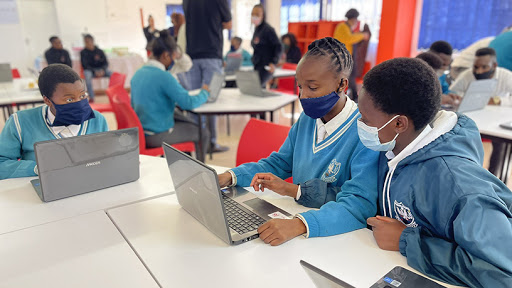
Youth and residents of Diepkloof Zone 6, Soweto, are facing a crisis due to the lack of accessible, even cost-free technology centres, as we as high data costs. Technology centres are an important part in the development and lives of young people and adults, as they are a crucial platform to learn skills which are necessary to prepare users for jobs in the modern world.
At present, there are only two internet cafes for the community of Diepkloof Zone 6. These two centres are not enough to meet the information and Communication Technology training needs in the area. These centres can only provide basic services such as emailing, internet access, typing, printing and photocopying.
The consequences of this mean that youth in the area cannot upskill themselves. This means they cannot get jobs requiring these scarce skills. They instead focus on applying for low-skilled casual jobs, which are difficult to secure due to popular demand for them, being the main jobs unskilled youth, those entering the world of work for the first time, normally go for. These jobs also do not pay liveable wages.
This makes it difficult to provide basic needs such as accommodation and food, let alone being able to escape the township and improve one’s standard of living.
Technology centres can train people for roles in the information technology industry such as computer repairs, cellphone repairs, computer programming, technical support and systems analysis, as we as web development. Due to South Africa’s turn to neoliberal policies early in the African National Congress administration, the responsibility to educate and upskill youth, preparing them for future roles participating in the economy, has been placed on the private sector. The cost of tuition and education in South Africa is extremely high, while on the other hand, most of its citizens are palpably poor.
Many working class people of working age try to learn online from their homes, but this is difficult to achieve due to the high costs of data and limited internet access.
The issues described above are a key feature of townships due to the stance taken by the neoliberal attitude adopted by the ruling party, chief among others, the tendency to reduce spending on social services such as education and service delivery. This means that the opportunities to subsidise or provide free technology centres in townships are cut or completely erased. Because of this, the poor black majority in the townships cannot get high-skilled and high-paying jobs or participate in the economy in a meaningful way.
On the other side of the coin, middle and upper class families have the means to send their children to the best schools in the field offering technology training, but these are expensive and usually private. These families are, by their very definition, able to afford data via access to the best Wi-Fi packages for their homes and mobile phones. They are also in a position to work and study remotely, placing themselves in the best position for the best opportunities, some of which are offered by companies from abroad.
This article is an opinion piece submitted on 29 May 2025. The views expressed by the author do not necessarily reflect those of Karibu! Online or Khanya College. You may republish this article, so long as you credit the authors and Karibu! Online (www.Karibu.org.za), and do not change the text. Please include a link back to the original article.

