
 Download PDF
What is really the endgame? The United States’ (US) invasion of Venezuela and the kidnapping of the sitting president, Nicolás Maduro, and first lady, Cilia Flores[1] on 3 January 2026, is simply outrageous. This is a watershed moment and has repercussions for Venezuela and people across the globe, as it erodes the sovereignty of a nation-state and violates international law. While the situation in Venezuela is evolving, the endgame is still unclear, and it is important to pay attention to what happens in Venezuela, domestically in the US, and internationally. Here are some thoughts on the invasion.
1. Baseless charges were used for the kidnappings:
The court in New York dropped the charges Nicolás Maduro alleging that the Venezuelan President is the head of the Cartel de los Soles (Cartel of the Suns). The cartel does not exist and was a myth perpetuated by the US administration. [The indictment used to charge Maduro has since been revised and does not include the so called ‘Cartel de los Soles’]
2. The kidnappings were an act of violence and war:
A 100 people, including 32 Cuban bodyguards, were killed along with civilians during the bombing of Caracas and other cities in Venezuela. The bombing in Venezuela followed bombings of mainly fisherfolk in small boats in the Caribbean Sea, on the false pretence that drugs were being transported. This action was preceded by a significant increase in US military forces stationed in the Caribbean Sea.
3. Regime change was not affected:
The government remains in place, with Delcy Rodriques, former Vice President, now the Acting President. Rodriques is leading the negotiations with the United States and was in charge of the Oil Ministry in the Maduro-led government. Negotiations with the US were taking place long before the kidnapping of Maduro; reportedly aimed at lifting the US sanctions that have been in place for many years.
4. The China factor:
China has significant, if not the largest, manufacturing capacity in the world. It is endowed with the critical raw materials needed for the transition to a carbon-free world.
It is a superpower capable of trading in its own currency, the Yuan. Like other countries, China holds a large portion of US debt. Importantly, China, along with Russia, has been buying oil from Venezuela. For some time now, the US has been threatened by China’s trading power. China, through its Belt and Road Initiative, has been building infrastructure in Latin America and elsewhere. That includes ports and oil refining capacity.
5. It is and has always been about oil and control of natural resources:
Significantly, Venezuela holds the largest oil reserves in the world, in addition to other key raw materials. Historically, Venezuela’s oil was controlled and exploited by US companies, even in the period since the nationalisation of the industry in 1976. The US invasion and kidnappings aim to put Venezuelan oil firmly under the control of the US government and US oil companies.
6. The imposition of sanctions is a war by another name:
The sanctions imposed by the US have over time caused great harm and suffering in Venezuela. The reforms put in place by the Hugo Chavez-led government (1999-2012) transformed the health system, education, housing, transport, and other public services. But these reforms were sharply limited by the imposition of sanctions which crippled the economy. This contributed significantly to the exodus of millions of Venezuelans.
6. It wasn’t about democracy:
The right-wing opposition leader Maria Corina Machado, the 2025 Nobel Peace winner hails from a Venezuelan family that has interests in the electrical industry. She is politically aligned with the Donald Trump-led US administration and the Benjamin Netanyahu-led Israeli government. Machado has repeatedly called for military interventions in Venezuela by the US administration. She has called for the wholesale handing over of Venezuelan state assets and placing them in private hands and private companies.
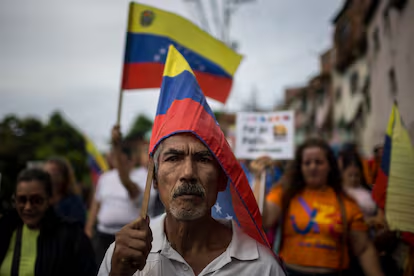
7. Venezuelans were and are against any sort of occupation:
Being bombed and invaded is a horrendous experience and many Venezuelans are prepared to defend the country’s sovereignty and right to lead its own development path.
8. The endgame is not in sight yet:
Many Venezuelans will respond and defend their country. Other nations, both nearby and from distant regions, will offer them support. Others will line up with the Trump administration, but others will not. We shall see! It is not the end of the story.
[1] Flores a lawyer who was President of the Venezuela National Assembly (2006-2011) and Attorney General (2012-2013). When she was kidnapped, she was a deputy in the National Assembly.
This article is an opinion piece submitted on 23 January 2026. The views expressed by the author do not necessarily reflect those of Karibu! Online or Khanya College. You may republish this article, so long as you credit the authors and Karibu! Online (www.Karibu.org.za), and do not change the text. Please include a link back to the original article.

