
 Download PDF
From 24 March to 1 April 2026, a team of 32 people participated in fieldwork for Khanya College’s Health Household Survey in Eldorado Park, Kliptown, Slovo Park, and Klipspruit. We worked in groups of 16 and covered all the streets and extensions in these areas. We used a method of counting and selecting every fifth household for interviews using the questionnaires provided.
Initially, many residents assumed that we were from the municipality, the government, or political parties, and suspected that we were there to ask for votes in exchange for development promises. However, we explained that we were from Khanya College conducting interviews with household residents to better understand their living conditions, income, access to healthcare, and the areas that need improvement within their families and communities. Some residents already knew Khanya and its work and agreed to participate in the survey.
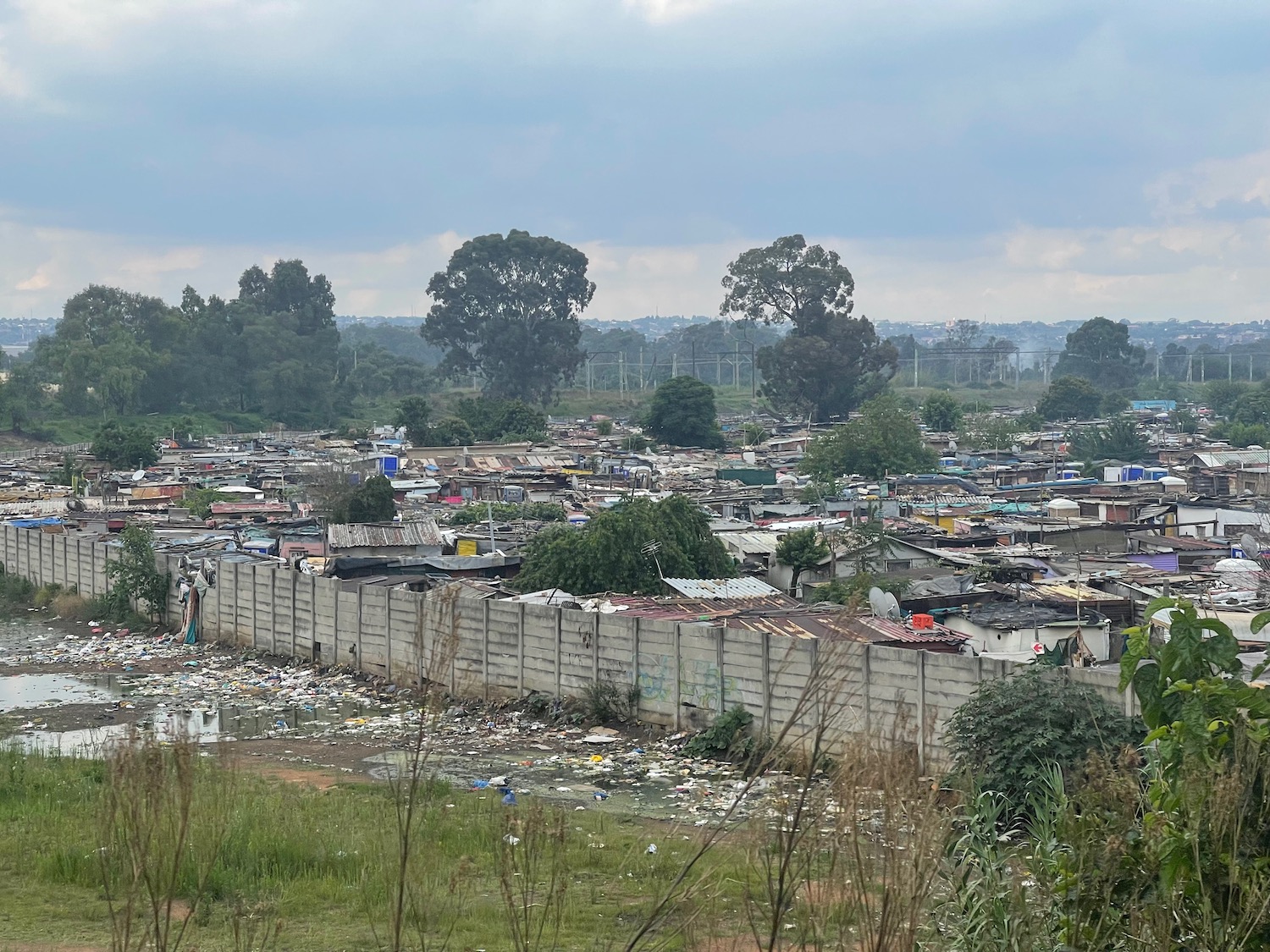
This article highlights access to healthcare and service delivery as social determinants of health, particularly in informal settlements compared to formal housing, such as bonded and council houses. Residents expressed a strong desire for improved housing, sanitation, infrastructure such as roads, street lights, and taps, healthcare facilities, and employment opportunities.
In Slovo Park, most residents complained about toilets and blocked drains, which cause unbearable smells when it rains. “The drains are always blocked, and when it rains, the smell is terrible. It’s a health hazard,” said Nombuso Zulu*. Another resident added, “The toilets smell because they are communal toilets. We use pine gel and Jeyes Fluid, but still it smells terrible and nothing gets done to help the community. We get sick easily and often because of the smell.”
Most residents we interviewed also complained about the poor condition of the shacks, bad roads, the attitude of clinic staff, and the lack of medication at clinics. Sipho Thwala* another resident said, “When we visit the local clinic, we wait for long hours and end up going home without medication because the nurses say the medicine is finished. Meanwhile, in the community, you find people selling clinic medication for R15.” Joe Slovo, though established in 1991, still does not have a clinic, they rely on a mobile clinic that comes to service the community once a week.
Another resident in Slovo Park mentioned, “We need proper houses, roads with street lights, because it is dangerous to walk at night.” Another resident added, “I have been living in Slovo since 1991, and my family has never lived in a proper brick house.” Residents are eager for change, both for their families and for the development of their communities.
In Kliptown, a resident from Johnson Stop complained, “In this street, different households share one toilet that is placed in the street. It is embarrassing and unhygienic. We need proper toilets and houses like RDP houses.” On one of the days of the survey, field workers witnessed the municipal truck coming to clear the communal toilets, which leaves the whole area smelling really bad.
Many shacks in the area lack basic services, with residents relying on communal taps and makeshift toilet arrangements while sharing drains. The shacks are also built very close to one another. Another resident said, “We just want to live in a safe and healthy environment. Is that too much to ask?”
Residents in informal settlements such as Slovo Park and Kliptown expressed the need for proper tarred roads with street lights, houses similar to government-provided RDP houses, improved access to basic services such as toilets, water, and sewerage systems, as well as nearby clinics with dedicated staff, adequate medication, and proper facilities.
In formal communities consisting mainly of bonded and council houses, such as Eldorado Park Extensions 1, 2, 3, 4, 6, and 9, as well as Klipspruit Extensions 1 and 2, residents generally have access to water, proper sanitation, tarred roads, and street lights. Residents in these areas also reported better health outcomes and improved access to healthcare facilities. They usually have clinics nearby, however these residents are not immune to the conditions in clinics, many complained that certain nurses are rude – however, most described the service as generally good.
The Health Household Survey highlighted serious health and service delivery gaps that continue to affect the well-being of residents. It was clear to see the difference in service delivery for areas that are considered middle class areas and informal settlements. Addressing these issues can improve people’s quality of life by ensuring access to basic services and promoting healthier environments.
This survey can become a voice for real change in these communities and contribute to development and improved living conditions.
This article was submitted on 7 April 2026. You may republish this article, so long as you credit the authors and Karibu! Online (www.Karibu.org.za), and do not change the text. Please include a link back to the original article.


