 Download PDF
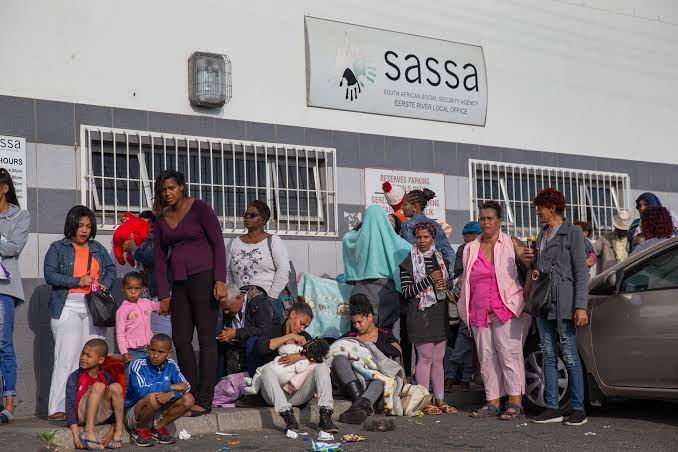
In the most disadvantaged areas of South Africa, there is a daily and quiet, yet deep struggle fought against extreme poverty. At the heart of this struggle is the Social Relief of Distress (SRD) grant, which has recently been raised to R370 a month. Politicians and economists discuss the financial aspects of social spending from a place of privilege but for millions of working class South Africans, this small amount represents the last obstacle between survival and disaster. In the strictest sense, it acts as a shield against hunger and despair. Only by looking at the amounts mentioned, from the point of view of the recipient can we see how little this amount is, despite suggestions from broad economic figures.
Officially sitting at 33.6% according to Statistics South Africa, South Africa has one of the highest unemployment rates in the world. This is a fundamental crisis which leaves millions of able-bodied adults without any income. In such circumstances, the R370 grant provides some form of subsistence. R370 is far below the official food poverty line but it is the main source for many households to afford a sack of maize meal, a bottle of oil, or a loaf of bread
Apart from meeting their physical needs genuine despair comes about when a person feels completely forgotten by society, and it is because of the consistency of this monthly payment that it provides an important psychological support and a small degree of predictability in a situation which is otherwise extremely unstable.
There is a widespread belief that social grants lead to a sense of helplessness, but in fact the R370 grant serves as an economic stimulus that promotes individual initiative. Poverty has a paralysing effect since if you have no rands, you cannot afford the cost of a taxi to submit a CV, to print a document or to buy data in order to look for work on line. By offering a basic level of financial assistance, the grant gives unemployed people the means and resources they need to take an active part in society. It changes people from being passive victims of an economic crisis into active seekers of opportunities and thus keeps the hope of a better future alive.
Hunger also causes instability, and if communities are driven to the very limit of their ability to survive, the social structure starts to break down, resulting in a rise in crime and social disorder. The R370 grant serves as a crucial factor in providing stability in South African townships and in rural areas by passing on resources directly to those who need them most. The people who receive the money then spend it straight away at local spaza shops and with the informal traders, thus ensuring that cash remains in circulation among the poorest neighbourhoods, helping to keep small local businesses afloat and promoting a common feeling of resilience.
The R370 grant does not offer a permanent solution to South Africa’s fundamental economic problems, but it is an essential link. It shows that in a society characterised by great inequality we cannot allow our most vulnerable people to be left to starve on their own.
Finally, this grant is not merely a financial exchange; it is a statement of solidarity, a practical means of survival, and a strong protection that keeps both hunger and despair at bay for millions of South Africans every day.
“The social grant is not enough, especially for my daughter’s basic needs. I do not get to cover all her needs, but it does cover the bare minimum. As much as it is little, it also sustains us”, said Melisha Lottering, who is on a learnership programme at Khanya College.
Others may argue to say that the grant sustains them, but others argue to say that it is not enough. There are different perspectives to this, but looking at it on the brighter side makes you see the goodness of the money.
“I have always used the money to buy myself toiletries. I’m left with nothing after I have bought my necessities, but I’m glad it is there for me to buy myself toiletries”, said Nompilo Mabaso from Webb Street, who lives alone.
“Research shows that the R370 Social Relief of Distress (SRD) grant provides crucial immediate relief against extreme hunger, but its low value falls well short of fully sustaining recipients or lifting them out of poverty”, the internet confirms the sustainability of the SRD. The social relief grant is a shield for many.
This article is an opinion piece submitted on 15 September 2026. The views expressed by the author do not necessarily reflect those of Karibu! Online or Khanya College. You may republish this article, so long as you credit the authors and Karibu! Online (www.Karibu.org.za), and do not change the text. Please include a link back to the original article.