 Download PDF
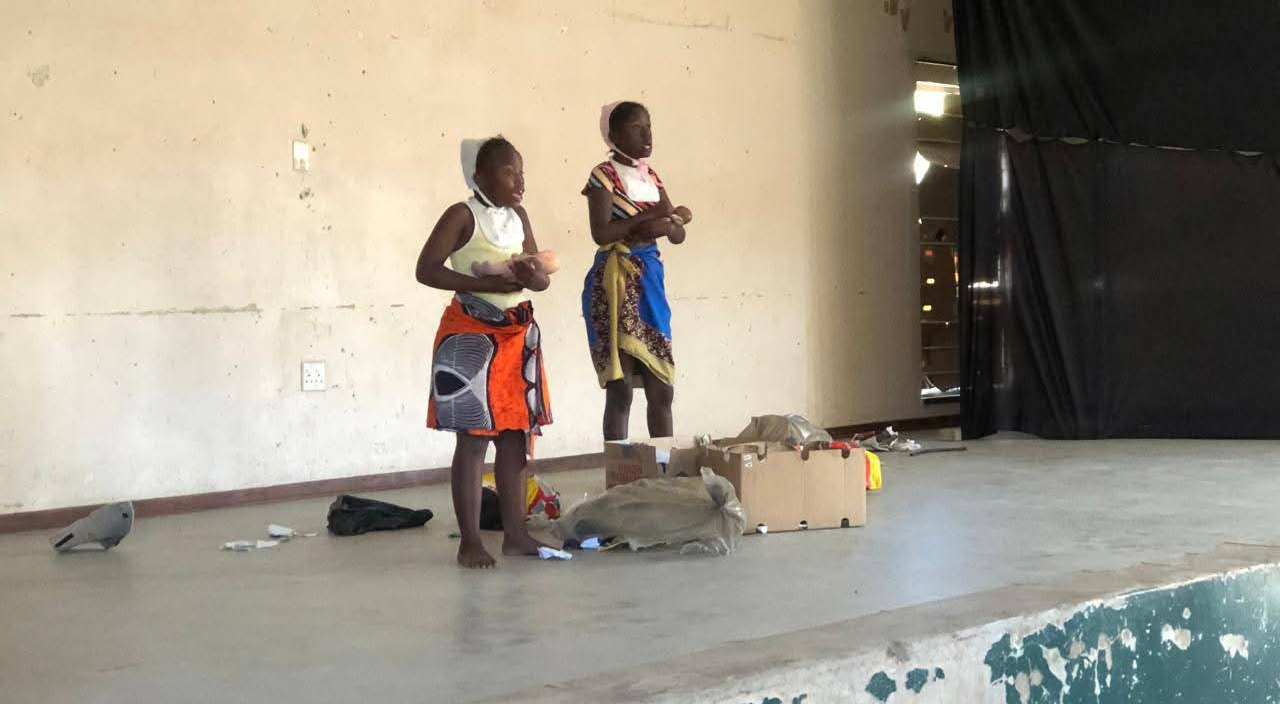
Amazwi Aya Philisa, that was the title of the memorable poetry session in Aminos Jaca, Kagiso, west of Johannesburg, in November 2025. Local artists increasingly took matters into their own hands at this gig, coming together to engage and reflect on issues affecting working class communities. The gathering took place at Kagiso Backyard Art Gallery and attracted many poets, including Rick Molley, Lleve, Azanla da Poet, Vuka Africa, Scrado, The Praying Poet, and several others who came to participate and show support.
The session carried the theme Bawo because it sought to give a platform to men who often remain unheard within the community. Bawo means “father” or “man” in isiXhosa. The theme aimed to challenge harmful narratives suggesting that men should not cry, that expressing vulnerability makes them weak, and that they must silently carry emotional burdens. The event also emphasised the power of words, how they can build or destroy, and encouraged people to be mindful of how they speak to one another.
Ellen Mosweu, a resident of Kagiso, said the session was inspiring and deepened her appreciation for how words can convey emotion and meaning. Mosweu added that the theme highlighted how words can heal and hold the power to soothe. She further reflected that the session reminded her that silence itself is also a message, and that not only spoken words express one’s feelings. Mosweu said she hopes more sessions like this will be held in the future because they help mend broken hearts.
Selia Ndeve, a resident of Swaneville, described the session as “super fun and helpful” because it explored the power of words and how language can either uplift or break a person. Ndeve said she was particularly struck by the phrase “kufa awunantloni,” (loosely translated, it means death has no shame) which made her realise that death has no timing, and that this truth is both painful and sobering. She said she had a memorable experience and looks forward to attending more sessions of this kind.
Mpho Mabaleha, also from Kagiso, said the session was powerful for him. Mabaleha shared that he learned a great deal, including the understanding that artists have a voice, that they have platforms, and that they must use those platforms intentionally. He added that what happens in their communities should not be seen as limited to individuals, because the effects ripple through everyone, making it their collective responsibility to educate, uplift, and support one another. Mabaleha said he gained a clearer grasp of the socioeconomic conditions shaping their community, and how these realities influence them, from artistic expression to everyday human experience.
Serame Sambo, a resident of Swaneville, said the session was unlike anything he expected. He found it uniquely enjoyable, noting that there was no strict lineup and that poets moved fluidly through themes such as men in society, the meaning of manhood, responsibilities of men, and the impact of men’s actions, whether good or bad, on the community. Sambo said he learned that artists often express themselves courageously through their work, whether in writing or visual forms. He pointed out that during the session, many artists found it easier to communicate through poetry and song rather than ordinary conversation.
Another resident from Swaneville, Jabulile Sithole, said the session explored the power of words and poetry to heal and uplift, true to the name Amazwi Ayaphilisa. She described the event as interactive and inspiring, highlighting the emotional and psychological impact of language. Sithole said she walked away with the lesson that words possess the power to harm or heal, making it essential to use them wisely and with intention. She expressed gratitude for being part of the gathering and hoped others were equally inspired to harness the healing power of poetry. She concluded by reminding people that words can transform and uplift, encouraging communities to spread love, kindness, and compassion.
Aminos Jaca, the organiser and a resident of Kagiso, said his main objective was to create a safe space where people could come together, talk, and listen without judgement. Jaca added that he wanted to highlight the importance of using literature as a tool for empowerment, especially within black, marginalised communities where a gap often exists between them and more privileged groups. He stressed that literature is not only for school environments, and that people need avenues beyond formal education to engage with reading, writing, and expression. Jaca said he is committed to growing a community that understands the meaning behind Amazwi Ayaphilisa, to read, write, share, and heal through words.
The session was a resounding success, with many artists expressing enthusiasm for future gatherings. Participants agreed that the event was both enjoyable and educational, and that it opened conversations the community deeply needs.
This article was submitted on 16 November 2025. You may republish this article, so long as you credit the authors and Karibu! Online (www.Karibu.org.za), and do not change the text. Please include a link back to the original article.