
 Download PDF
On Monday, 22 September 2025, organisations from the Defend Public Spaces Campaign met with officials from the Mayor of Joburg’s office. The meeting was held in response to the dispute over Khanya’s continued use of the Workers Museum Cottages (WMC) in Newtown. Although a heritage site, the city intends to evict Khanya and house administrative staff in the cottages.
The Defend Public Spaces campaign (DPSC) decided that in for reasons of transparency, a delegation would hand over the Petition to the mayor’s office. The delegation of 15 represented eight participating organisations, including Khanya College and its Board; fraternal non-governmental organisations like Bench Marks Foundation, Casual Workers Advice Office; art and cultural organisations like Page2Stage, Imbumba Young Solutions, Sakha Ilizwe Arts Centre; and community organisations like Snake Park and Cerebral Palsy. The Mayor’s office was represented by Director Phumzile Sithole, Deputy Director Lawrence Bayana, Stanley Maphiri, and Mirriam.
In her opening remarks, Maria Van Driel, Director of Khanya College said, “We’ve always had a good partnership with the Department of Arts and Culture and the City,” especially with the WMC, This is a space where people from the townships come to the city, host events, engage with culture, and simply be together,” she said.
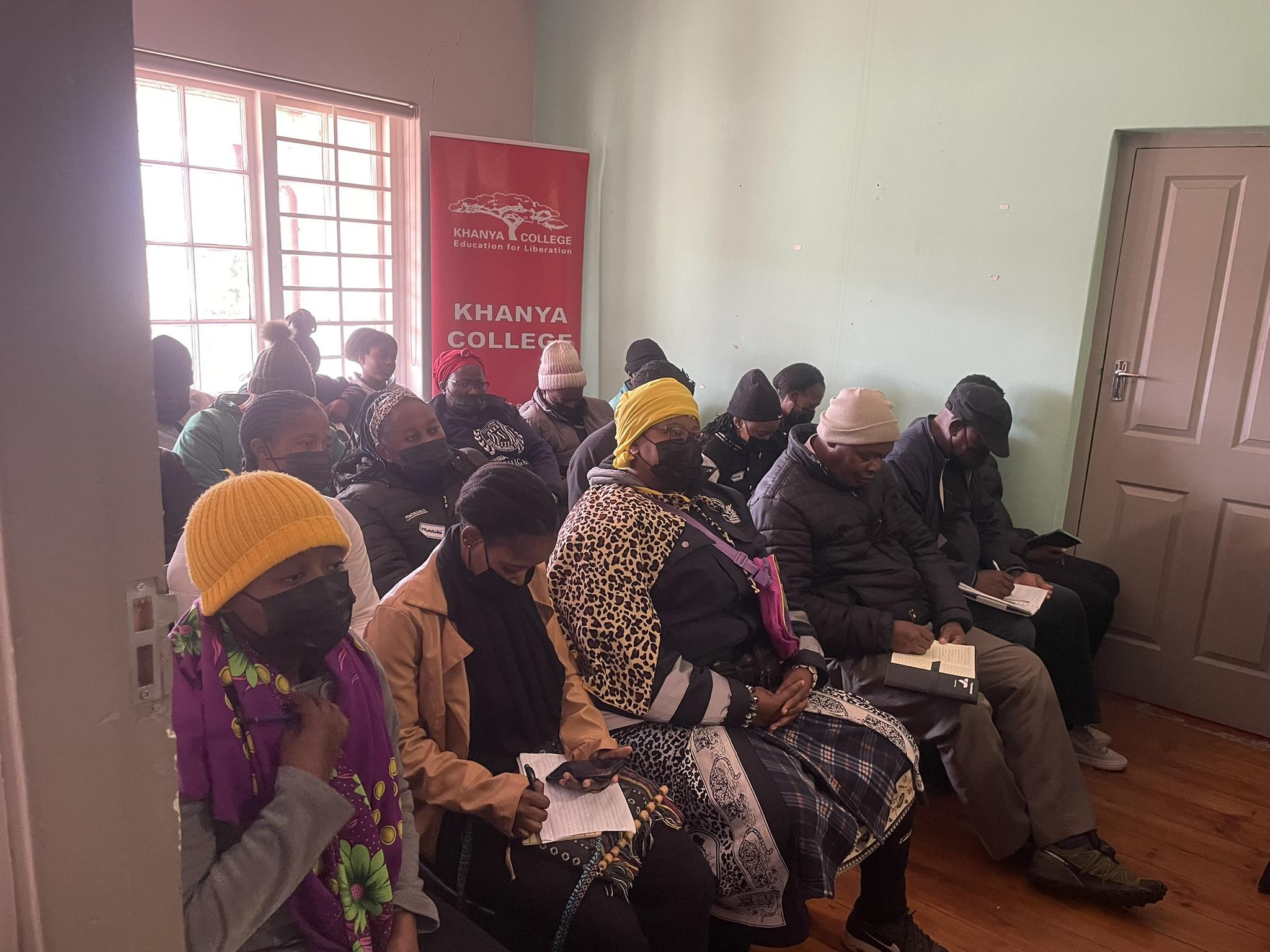
In July, during negotiations between the parties, the City agreed to Khanya consulting communities on its planned eviction. At the consultation meeting, on 19July, communities said, “Khanya should not only stay at the Cottages, but should serve as the guardian of the Workers Museum as a whole, in partnership with the City.” Communities proposed that Khanya be responsible for the programme development and operations of the WMC; and that the city be responsible for structural maintenance and repairs. “This is the way other museums are operating, like Sophiatown, Roodepoort and the Holocaust Museum, with formal community-based partnership agreements,” she explained.
Lawrence Simelane from Page to Stage, Babongile Gwiliza of Sakha Ilizwe and Noluthando Xaba of Imbumba Young Solutions, who all facilitate theatre workshops with children and youth across Soweto, shared how important the Cottages have been for young people’s development and creativity. “This is one of the few spaces that welcomes us,” said Simelane. “It must be protected.”
Director Sithole acknowledged Khanya’s role with the WMC, but she noted allegations that Khanya was using the site for storage. In response, Van Driel invited the mayor’s office to do a site inspection before just accepting what the Department says. Moses Cloete, of Bench-Marks Foundation, rejected the accusation, pointing out the irony of the City trying to evict Khanya while many municipal buildings across Johannesburg remain empty and neglected. “Why doesn’t the City use one of the buildings instead of evicting a functioning space that serves working class communities?” he asked.
The accusation of using the Cottages for storage was described as libellous by Thokozile Mntambo, from Bench-Marks addressed Director Sithole directly, and expressed criticism of what she saw as bias and disrespect from the Mayor’s Office. “You came to this meeting siding with the Directorate, before even hearing from us. You have ignored our reports and failed to do your own research. This campaign is about dignity, history, and community power.”
Mntambo’s comments were echoed by others who noted that the city officials had failed to grasp the social value of the site. The meeting also revealed that the museum is sometimes locked, even though city staff are aware of youth visiting.
Sithole conceded that the museum being locked was concerning and agreed to a site visit to assess the current use and management of the WMC. She also agreed to facilitate a follow-up meeting where the matter would be addressed in full by all parties. The Campaign remains firm that the Cottages remain in Khanya’s hands, where communities have the flexibility to access the space without undue bureaucracy.
This article was submitted on 23 September 2025. You may republish this article, so long as you credit the authors and Karibu! Online (www.Karibu.org.za), and do not change the text. Please include a link back to the original article.

