
 Download PDF
Following South Africa’s April, Human Rights month, the country is reminded of the contrast between its ideals and the harsh reality faced by its most vulnerable citizens which are the children.
On March 21, South Africans commemorated the sacrifices made by people during the apartheid era, especially in 1960 when the then regime unleashed terror on those who were part of the Sharpeville march committing a massacre. What followed was an intensification of struggle against apartheid. The efforts paved a way for the country’s democratic dispensation and constitution which promotes the rights of all citizens, including children.
Even though we have this commitment to human rights, South African children continue to face gruesome levels of violence, abuse, and neglect. The institutions meant to protect them including families, communities, and schools are failing to provide a safe haven for children.
Schools, in particular, have become a breeding ground for violence affecting children. Learners report disturbing bullying incidents at schools, alleging that they are forced to pay to use toilets. This practice is a form of abuse where children are being taken advantage of, presumably by older learners. Such incidents at schools calls for an urgent need for schools and communities to rebuild and organise themselves to address violence at schools and ensure a safe environment for all students.
As the country closely follows the court revelations surrounding the case of Joshlin Smith, 7, its clear that children may not be safe even in the care of a loved one. Joshlin vanished from her home in Western Cape. We witness, a rise in cases of teachers accused of raping learners The latest incident happened to Cwecwe, a 7year old girl who was raped at her school, Bergview College, in Matatiele.
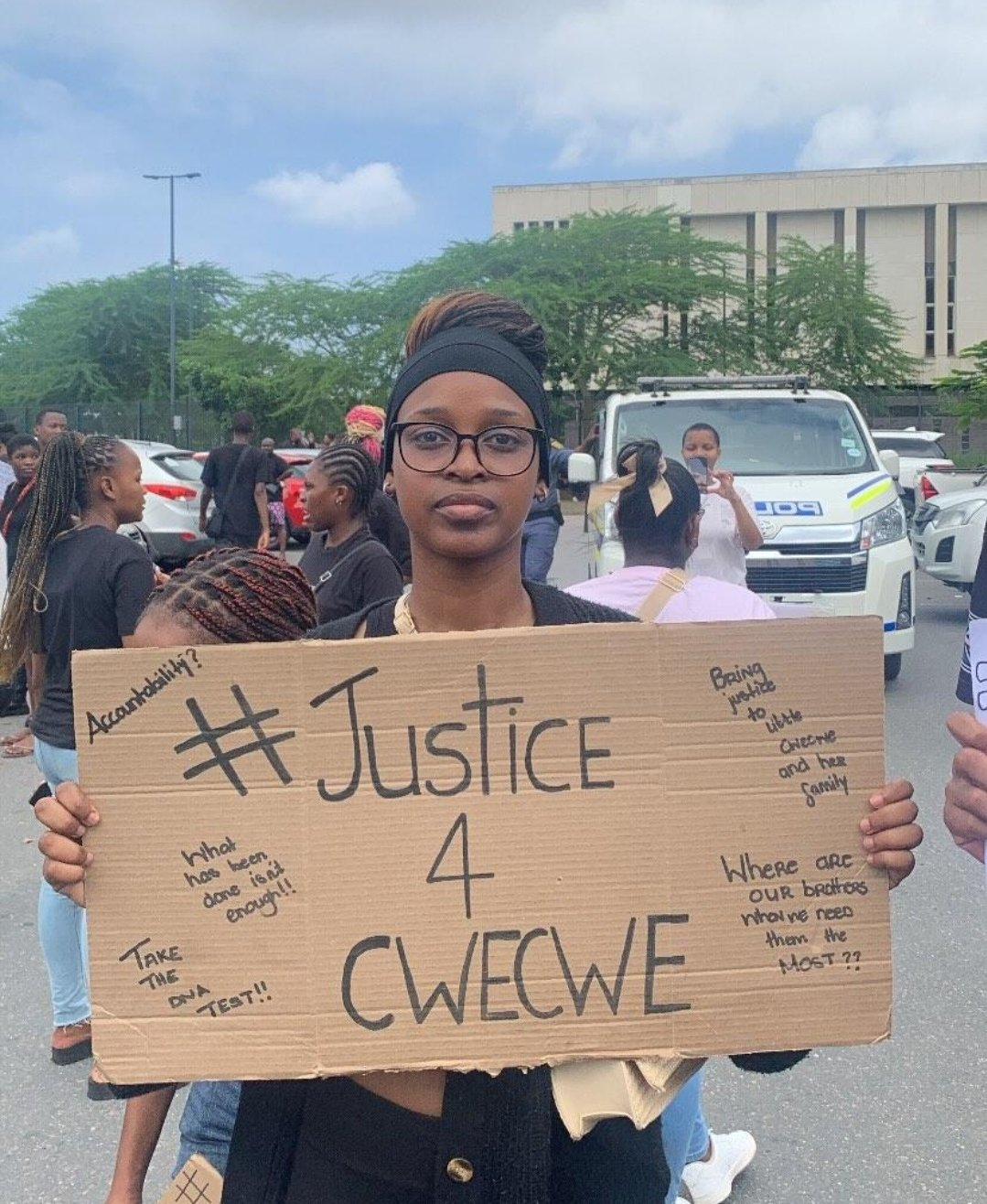
The gruesome incident has led to nationwide march, demanding justice for Cwecwe. Her mother, Thandekile Mtshizana, has spoken out about the challenges she faces in seeking justice, alleging that the school principal refuses to provide a DNA sample and has intimidated her to protect the school’s reputation. She has also expressed frustration with the slow pace of the investigation.
In response, South Africans have mobilised across different provinces and tertiary institutions to advocate for Joshlin and another young victim, Cwecwe. The movement, which has gained significant momentum, seeks to amplify the voices of these children and push for accountability, justice, and systemic change to prevent such incidents in the future.
Lorna De Villiers, said, “I am impressed with the youth taking a stand and voicing their disgruntlement with what has happened to the child. This little girl is traumatised; our government doesn’t protect our children, they need to bring back monitoring and evaluation at schools and at SAPS because they seem to be dragging their feet in dealing with issues. Schools have become so unsafe for our children this is unacceptable.”
“Our children, both girls and boys, are not safe anywhere in the world, the fact that there are teachers who sexually abuse children makes me wonder if schools do a proper background check before employing someone,” said Makhosazana Msibi who is a parent. She continued by saying, “The government has failed our children and women. A lot of rapists walk freely while victims suffer because they can easily bribe someone, also the fact that race plays a big role in our country is disgusting because had Cwecwe or Ali [proven to have] been raped by a black man that person would be all over the news and punished.”
Msibi said that someone of a different race refusing to cooperate with the police would have put him in big trouble with the law.
According to Stastista (2024) As of the 2023/2024 fiscal year, a total of 11,240 children in South Africa were reported as victims of a select few contact crimes. Around 69 percent of these crimes committed against children were categorised under assault with the intent to cause grievous bodily harm, with 7,771 reports.
The Justice for Cwecwe Movement calls action beyond seeking accountability for Cwecwe’s rape. It’s a demand for increased protection for children and to hold perpetrators accountable, no matter their social class or status.
This article was submitted on 02 April 2025. You may republish this article, so long as you credit the authors and Karibu! Online (www.Karibu.org.za), and do not change the text. Please include a link back to the original article.

