
 Download PDF
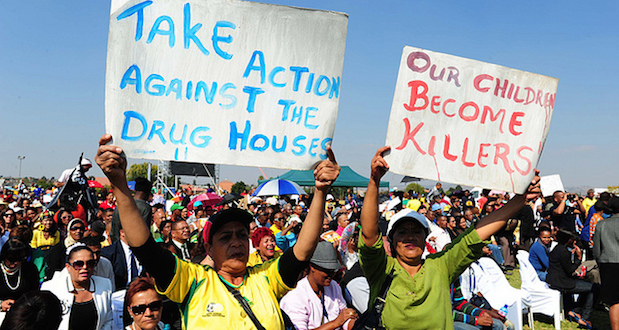
Drugs these days are more common in working-class communities. This is within a context of struggle against issues like poverty, education, and a lack of opportunities, making these challenges even harder to overcome. Drug addiction has become a feature of life in many working class communities because the addict is often a close friend or family member. I am familiar with many drug users who were once close friends. Some turn to drugs because they are not given the opportunity to express themselves.
Most drug addicts are people who have some skills and once had good habits. They may have enjoyed reading or writing, but where there is a lack of resources and support, people often turn to what is available to them at the time.
There is a growing challenge today. Addicts now use drugs openly in front of children and families. Many no longer seem concerned about the impact of their actions. Children on their way to school are exposed to these realities daily. Some are afraid to go home because drug abuse exists within their own households. These situations are difficult for children to understand and can influence how they view the world and their future.
Many young people experience trauma that pushes them towards drugs and other harmful behaviours. They learn from what they see and hear around them. As communities, we sometimes take these problems for granted, forgetting that our children are growing up in the same environment.
Providing young people with positive activities can help keep them away from drugs and crime. Drug addiction is not only the addict’s problem; it is a community problem. We need collective solutions and open discussions about how to move forward. Stigma also plays a major role, preventing many people from seeking help until it is too late.
Communities can begin to turn things around by making help more accessible, supporting affected families, and creating opportunities for young people through mentorship programmes, skills training, and sports activities.
If you live in a community like Eldorado Park, you do not need statistics to tell you there is a drug problem. We see it every day. I remember my friend Gershwin, with whom I attended school and played after classes. During high school, he became involved with drugs and started stealing. His parents eventually sought help from me. Together we found him at a drug house in Kliptown and convinced him to enter rehabilitation. A year later, Gershwin returned home healthy and drug-free. His recovery showed me that change is possible when people receive support.
More awareness programmes, rehabilitation centres, job opportunities, community gardens, and youth sports initiatives are needed. These interventions can help strengthen communities and give young people alternatives to drugs.
This article is an opinion piece submitted on 08 Jun 2026. The views expressed by the author do not necessarily reflect those of Karibu! Online or Khanya College. You may republish this article, so long as you credit the authors and Karibu! Online (www.Karibu.org.za), and do not change the text. Please include a link back to the original article.


