
 Download PDF
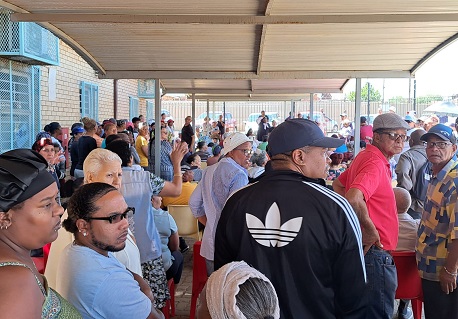
In the Khanya College Household Survey, one of the main issues raised by community members was the quality of health services at local clinics. The survey included questions about access to health care and what improvements people would like to see in the public health system. The findings showed that many residents are dissatisfied with the services they receive at their local clinics.
Janet Peterson (72) said that clinic staff are often rude and that patients wait for many hours before being assisted. Many residents also complained about medication shortages, clinics opening late and closing early, and the shortage of health workers.
These concerns are even greater in communities such as Slovo Park and Kliptown, where there are no nearby clinic facilities. Elderly women explained that travelling to clinics costs money that many families do not have because of unemployment. Some people said they sometimes go to the clinic without having eaten because there is no food at home, making it difficult to take their medication. Community members suggested that clinics could provide something simple, such as two slices of bread, especially for patients who wait for long hours and have no money to buy food. Residents also called for more professional nurses and a 24-hour mobile clinic service that operates regularly, regardless of the day or weather conditions.
A facilitator at the Extension 9 Clinic, responded to these complaints by explaining that clinic staff also face many challenges. She said that some patients are disrespectful and expect to be helped immediately, even when they arrive late.
According to her, some people enter the clinic carrying weapons and threaten staff members, while others arrive angry because of problems at home and verbally abuse nurses. She explained that nurses cannot leave consultation rooms unattended because medication could be stolen. She added that the clinics also does not have resources to do its work efficiently, for example, they do not have printing machines which makes it hard to do health campaigns.
She also said that some patients visit the clinic only to obtain a doctor’s letter for work rather than because they are ill. Others become impatient while waiting in queues and accuse nurses of being rude. She added that some mothers insist on telling nurses which medication their children should receive, often demanding antibiotics or Allergex, even when these medicines are not medically necessary.
The facilitator further explained that between 2017 and 2018, the clinic provided bread and peanut butter to patients. However, the programme was stopped because many people refused the food, and staff often found it thrown away in the clinic bins. Some community members referred to it as “poverty choke food”.
Despite these challenges, local clinics remain a vital lifeline for thousands of people. They provide affordable or free health care, promote preventive health services, offer health education, and ensure that people can access treatment regardless of their income.
However, the survey also highlighted several weaknesses in the public health system. These include long waiting times, shortages of staff and medication, heavy patient loads, limited specialist services, and a lack of resources.
The survey found that people with medical aid often have a very different experience of health care. In areas such as Extension 9 in Eldorado Park, many residents rely on private health care rather than public clinics. As a result, they reported fewer concerns about clinic services.
One medical aid user said, “I can see a specialist within days, not weeks.” Priscillia Davids (43) explained that medical aid gives her quick access to health care, shorter waiting times, less overcrowding, and online medical assistance at any time of the day or night. She believes this results in more accurate diagnoses and better quality care.
The advantages of private health care include faster access to doctors and specialists, shorter waiting times, better-equipped facilities, more treatment options, and greater flexibility in choosing health care providers.
However, private health care is not available to everyone. The survey found that expensive monthly premiums, additional medical costs, complicated a d m i n i s t r a t i v e processes, and medical aid policies that do not cover all treatments prevent many people from accessing these services.
The findings of the Khanya College Household Survey highlight the unequal health care experiences of different communities. While public clinics remain the only option for many people, they continue to struggle with overcrowding, staff shortages, limited resources, and growing patient demand. At the same time, private health care offers faster and more convenient services but remains out of reach for many because of its high cost. Addressing these inequalities will require greater investment in public health services, improved staffing and infrastructure, and a stronger commitment to ensuring that everyone has access to quality health care, regardless of their income. The healthcare landscape in Eldorado Park presents a stark contrast between the local clinic and medical aid services. While clinics offer affordable community-focused care, they often struggle with resource limitations. Medical aid provides convenience and faster access, but at a cost. Ultimately, the choice depends on individual circumstances, income, and priorities.
By addressing these areas, South Africa can work towards more equitable, inclusive, and effective healthcare. Communities can also make living standards much better by just changing the attitudes and appreciating the free local clinic assistance they receive have respect for one another. But more importantly, South Africa has to collapse its existing two-tier healthcare system and improve it for all of its citizens, as part of a bid to address inequality.
Key differences between local clinics and Medical Aid communities
| Local clinic | Medical aid |
| Cost is affordable | Expenses/premiums |
| Long waiting hours | Shorter waiting hours |
| Limited access to a specialist | Faster access to specialists |
| Staff attitude is dismissive and impatient | Compassionate and patient |
This article was submitted on 10 June 2026. You may republish this article, so long as you credit the authors and Karibu! Online (www.Karibu.org.za), and do not change the text. Please include a link back to the original article.

