 Download PDF
Storm drainage might seem like a basic issue, but in our community of Eldorado Park, it plays a direct role in health, safety, and everyday quality of life. When drainage systems fail or do not exist, the effects ripple through households, schools, and public spaces.
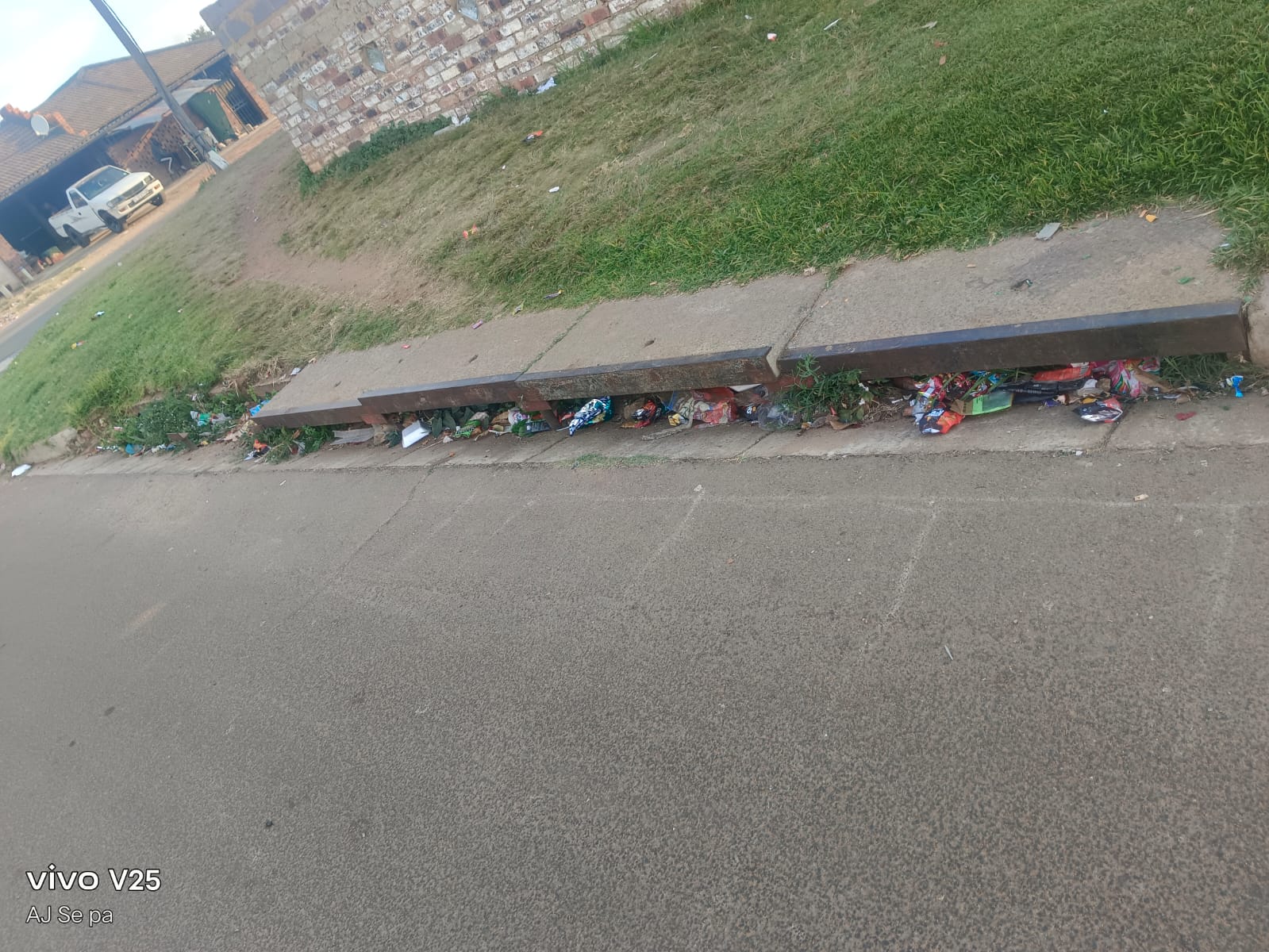
Blocked or inadequate drainage causes stagnant water during rainy periods. Stagnant water becomes a breeding ground for mosquitoes, increasing the risk of diseases such as malaria and dengue fever. It also mixes with waste, contaminating the environment and raising the risk of waterborne diseases such as cholera, typhoid, and diarrhoea. These illnesses affect children and the elderly most severely, leading to missed school days, loss of income, and higher healthcare costs.
In areas with poor drainage, rainwater often floods homes in informal settlements and low-lying areas. Flooded homes damage property, create damp conditions that worsen respiratory illnesses, and force families to live in unsafe environments.
“Every rainy season we see the same problem. Families lose their belongings and children get sick from the dirty water. This is not just about drains; it is about dignity and health,” says a community leader in Ward 17.
When roads and pathways flood, people cannot easily reach clinics, hospitals, or schools. For a community where many residents already rely on public services, this cuts off access at the exact time it is needed most. Pregnant women, people living with chronic illnesses, and students are disproportionately affected.
“Last month my daughter missed two weeks of school because the road was flooded. I could not even take her to the clinic when she had a fever. We feel forgotten,” says Lameez van Wyk, a resident of Extension 7.
Flood damage forces families to spend money on repairs instead of food, education, or healthcare. Frequent illnesses caused by poor sanitation also reduce productivity and keep people trapped in cycles of poverty. The burden falls heaviest on low-income households that cannot afford private solutions such as water pumps or private healthcare.
Addressing storm drainage requires a community-wide approach. Community clean-up campaigns and the regular clearing of drains and gutters can help prevent blockages. Investment by local government in proper drainage systems and ongoing maintenance is also critical, especially in vulnerable areas.
Storm drainage is not just about keeping streets dry. It is about preventing disease, protecting homes, and ensuring that people can access healthcare and education without disruption. Improving drainage is one of the most direct ways to reduce health inequalities and build a healthier, more resilient community for everyone.
If we act now, we can turn every rainy season from a crisis into a manageable part of community life.
This article was submitted on 10 June 2026. You may republish this article, so long as you credit the authors and Karibu! Online (www.Karibu.org.za), and do not change the text. Please include a link back to the original article.