 Download PDF
Every morning starts without water in Johannesburg’s working communities. There are random power cuts, roads punctuated with potholes, rubbish not collected, neglected facilities, and many other problems. None of those are considered luxuries; all of them are basic needs of the community. “The government has really failed us”, said Mongi Sibindi, 39, talking about social services.
Working class communities suffer the most. Wealthy communities can use the help of private security, generators, boreholes, and can access private healthcare, when the state does not deliver services to the people. For working class people, the state is the best route to getting services. So, without water, people cannot build a costly system to provide themselves with water. Without public transport or roads, it is harder to get to workplaces and so on. Electricity shortages impact families and small businesses negatively.
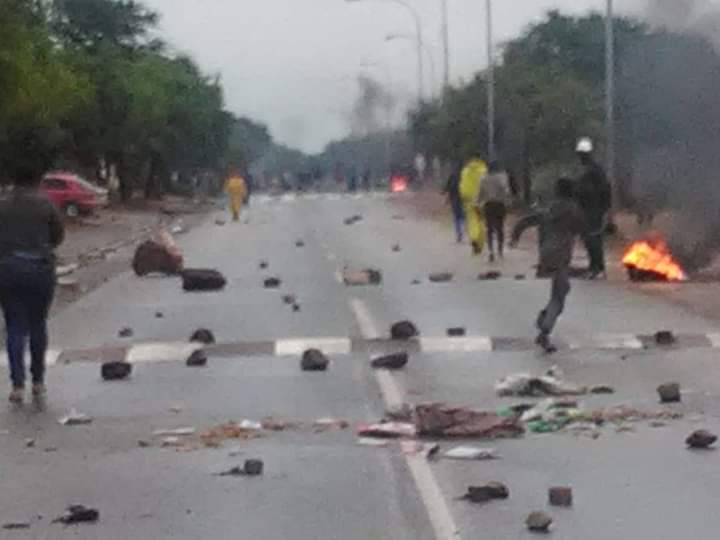
Another problem is the way service delivery is handled close to elections. Before elections, politicians often visit communities and make promises about better housing, roads, water, electricity and other services. These promises create expectations among residents, but after the elections, many communities say that the services they were promised do not happen or take too long to reach them. As a result, residents are forced to organise protests to demand services that are already the responsibility of government.
“Even if we protest, we are never heard. They just toss us aside like we are nothing,” said Issaih Shibane, 20 years old, from Yeoville.
Service delivery also influences lives of the young people. Schools in working-class communities might suffer from poor infrastructure, broken toilets, lack of resources. Young people are supposed to make their way into the future, but at the same time, they grow up in communities which are lacking some basic needs. This makes the cycle of poverty and inequality going from one generation to another possible and inevitable.
The problem is not that communities are asking for too much. They want nothing but clean water, working sanitation, safe roads, reliable electricity, proper housing and communities where people can live decent lives. All of this should be basic human rights, not privileges which can be bought using private resources.
All of those issues reveal a deep inequality in the modern world. Those who work the hardest and contribute to the national economy, are the ones suffering from poorest services. “I have been working so hard in my life and most of the time when I get home there is no electricity or water, the government keeps promising us lies”, said Siyamthanda Biyase, 20 years old.
This article is an opinion piece submitted on 04 September 2026. The views expressed by the author do not necessarily reflect those of Karibu! Online or Khanya College. You may republish this article, so long as you credit the authors and Karibu! Online (www.Karibu.org.za), and do not change the text. Please include a link back to the original article.