 Download PDF
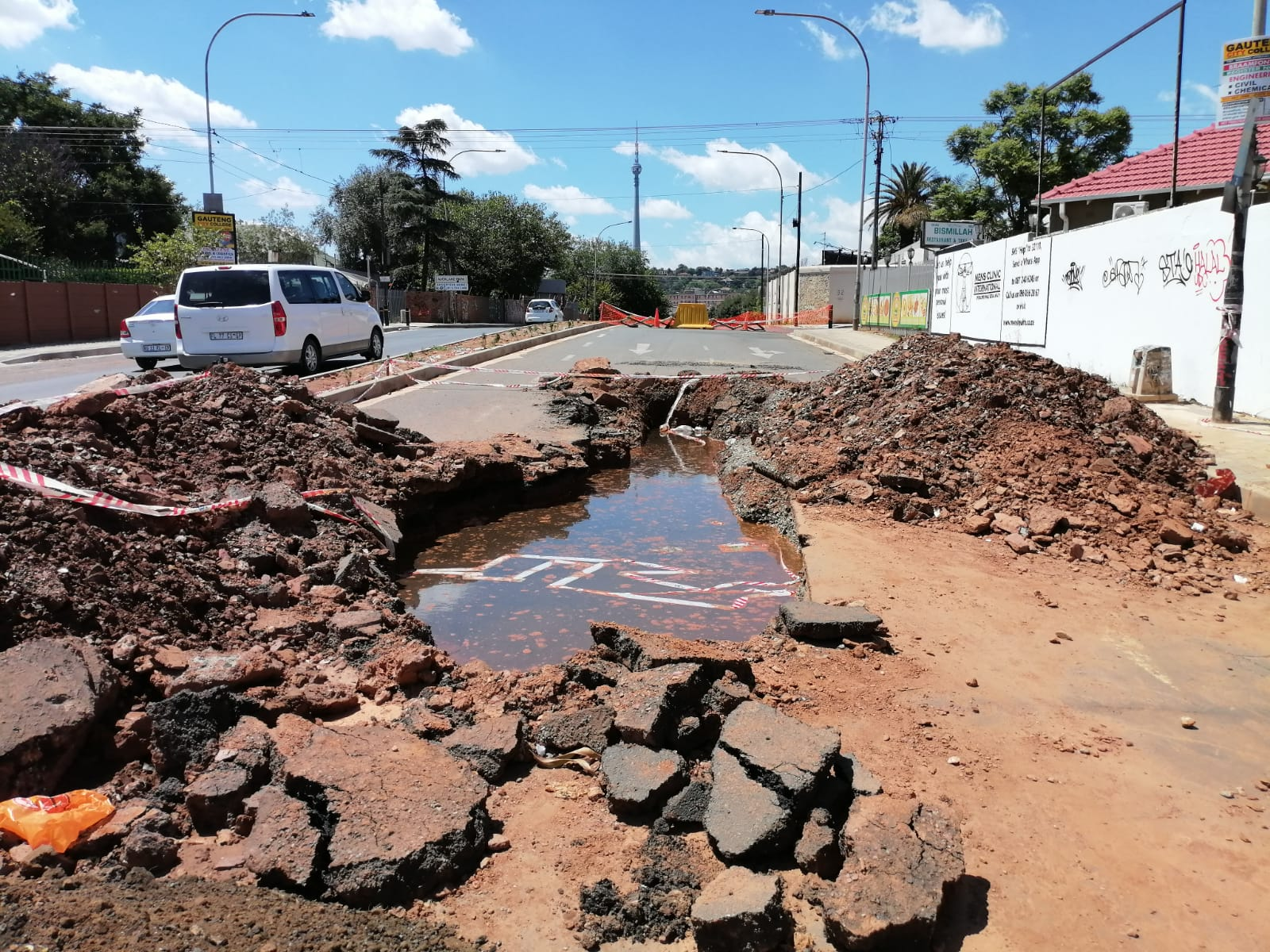
The City of Johannesburg (COJ) is facing big infrastructural problems and a backlog in maintenance. The city is struggling to maintain roads, a backlog in replacing stolen and broken traffic lights. The COJ struggles to supply electricity to all residents within it while the water infrastructure is crumbling with leaks everywhere. Most of the roads have potholes, especially in the nearby townships, which increase the chances of risk of accident. These are areas of mounting evidence that the city is collapsing and decaying.
One cause for the crumbling infrastructure is poor governance, mismanagement of resources and lack maintenance of infrastructure.
During an interview with Moneyweb, the (former) Acting Head of Department of Mobility and Freight at the Johannesburg Roads Agency (JRA), Sipho Nhlapo said the problem of the traffic lights is because of syndicates stealing copper cables. The JRA has been responding to the problem by reducing the amount of copper used in the traffic lights cables. Nhlapo further said that although the JRA budget is not enough, they are trying to fix where they can point to roads such as M1, M2 and the Joe Slovo roads have undergone resurfacing.
In the JHB municipality water and sanitation are a major challenge, most townships within the COJ, from Naledi, Freedom Park to Yeoville, are suffering from daily water cuts. Taps in many parts of the city have been dry for months, including some blocks and wards in Freedom Park.
A Freedom Park resident in her 60s, Thembi Ngwenya, talked to the writer about their challenges with electricity and water in their community. Ngwenya also said that their daily water cuts are causing hygiene issues as they cannot flush their toilets, wash their hands, or cook food. She was very happy that the amount of time loadshedding was implemented was reduced but the community is now faced with different challenges in electrical cable theft.
Johannesburg city claims that informal settlement residents illegally access water, saying that these illegal connections are the cause of water shortages. Some informal settlements such as Phumlamqashi in Lenasia, south of Johannesburg, are experiencing water cuts.
The municipality depriving residents of water is a human rights violation.
Some communities in Johannesburg are targeted for prepaid water meter installations but these are being resisted by communities like Cosmo in the northern Johannesburg area. Residents are citing issues of unemployment and that they cannot afford to pay for water in the current socio-economic conditions of South Africa.
Via a summary report from WaterCAN after their inspection meeting held with Joburg Water (JW) held on 09 December 2024, JW said the water crisis in the city is due to high demand, leaking reservoirs and high losses while storage capacity is insufficient to meet the demand. The report also said that “JW has an infrastructure renewal backlog of proximately R24B because of underfunding.” Problems such as those seen at the Hursthill reservoir 2, which is severely limited due to structural damages as the reservoir has a crack at 1.4m, making it impossible to fill up beyond 40% capacity, are not unusual.
The city crisis won’t end while the policy model is about the user paying, which goes against the high levels of unemployment rate in the city. The economic policies of the country under the ANC and now under the Government of National Unity, are underlain by the Growth, Employment, and Redistribution policy framework which encourages austerity and has dire consequences for the working class, it works against any development of people but focuses on profit before people. The framework has only increased the privatisation of SOEs and commercialisation of key sectors while it also has been the source of poverty and jobs bloodbath.
This article was submitted on 10 April 2025. You may republish this article, so long as you credit the authors and Karibu! Online (www.Karibu.org.za), and do not change the text. Please include a link back to the original article.