 Download PDF
For a long time, our people have suffered under the weight of neoliberal policies that prioritise profit before people. Privatisation is an elite economic ideology that made a comeback, globally. This was in the early 1970s, as an alternative economic framework promoted by conservative political leaders, business owners, and reactionary economists after the Organization of the Oil Exporting Countries (OPEC) oil price shock severely affected the world economy. These neoliberal economic frameworks later gained global influence and support through leaders such as Margaret Thatcher and Ronald Reagan in 1979 and 1981.
At the same time, the South African apartheid government was facing its own economic crisis, including sanctions. We then saw the rise of neoliberal policy through the National Party’s White Paper on Privatisation in 1987. This paved the way for the economic framework inherited by the next government.
The so-called democratic government led by the ANC under the Government of National Unity adopted strong privatisation influences. These were agreed upon during the Convention for a Democratic South Africa (CODESA) negotiations in Kempton Park. Through policies such as the Growth, Employment and Redistribution (GEAR), South Africa shifted towards becoming a neoliberal state. These policies gave authorities power to restructure government assets through total privatisation by selling public entities to private businesses, introduce “public-private” partnerships (PPPs), and expand outsourcing through contracts and temporary labour.
It also allowed them to introduce user-pay systems through cost recovery strategies, to cut social expenditure through Structural Adjustment Programmes (SAPs), and to introduce flexible labour laws.
But we must take note: statistics often claim that between 1993 and 2005 water access increased from 67% to 85%, and later to 93% in 2015. However, we must honestly acknowledge that many people in deep rural areas still lacked proper access. Those with communal taps or yard taps often experienced dry taps, a reality that continues today in places such as Limpopo, Eastern Cape, and Hammanskraal. Growing informal settlements were also not fully accounted for in these statistics.
Through cuts to social expenditure promoted by the ANC alongside the International Monetary Fund and the World Bank, the so-called liberation government created a financial narrative to justify shifting public responsibilities into private hands. Government argued that public institutions lacked the financial capacity to deliver services, while simultaneously advancing privatisation, outsourcing, PPPs, and BEE deals.
The threat of privatisation is reflected in South Africa’s severe water crisis. We are witnessing deteriorating infrastructure, with nearly 40% of water being lost due to poor maintenance, corruption, mismanagement, and under-capacitation. It is this profit-before-people economic framework that continues to worsen the water crisis in South Africa, especially for the poor working class.
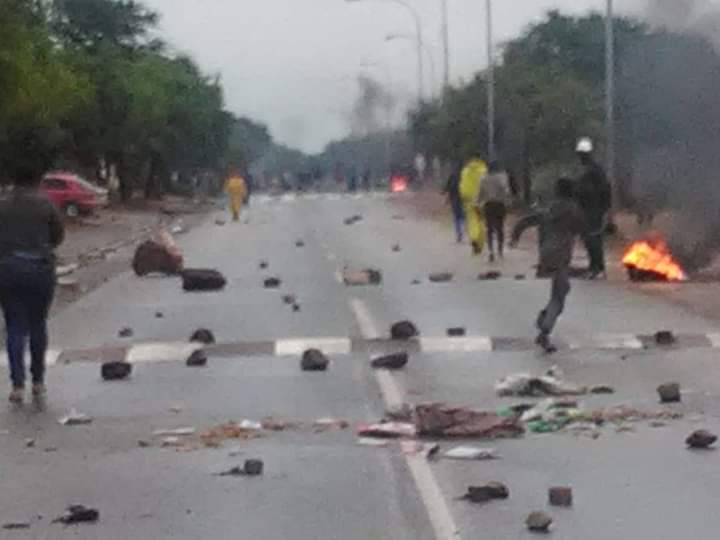
This has resulted in rising water cuts in areas such as Freedom Park and Soweto, unaffordable tariffs, and serious public health crises, including cholera outbreaks in KwaZulu-Natal and Alexandra. These realities expose the contradiction between profit motives and the constitutional right to water, and remain a stark reminder of the failures of the capitalist system.
What is even more disturbing is the government’s attempt to blame poor and vulnerable communities for the crisis. In December 2024, residents of the Mphumlamqashi informal settlement were accused by officials of stealing water, resulting in the entire community being disconnected.
But the question remains: what about those who are stealing our resources, infrastructure, and future?
We reject the narrative that blames the poor for the water crisis. We reject the notion that water is a commodity to be bought and sold.
Water is a constitutional right and must remain so. For millions living in poverty, unreliable access to clean water is not merely an inconvenience, but a daily threat to health, livelihood, and survival.
The disconnection programme in Mphumlamqash opened space for alternative water supply systems such as JoJo tanks, which represent another form of privatisation through outsourcing and tender systems that benefit friends, families, and politically connected individuals.
We are also witnessing the blanket installation of water meters in poor black working-class communities such as Cosmo City and Soweto. This reflects government’s ongoing push for mandatory cost recovery, while working-class communities, particularly black communities, continue to experience daily water cuts. Capitalism continues to build the narrative that public institutions are inefficient.
What Must Be Done
We demand:
- Government investment in water infrastructure that prioritises people before profit.
- Respect for the constitutional right to water, with no disconnections for those who cannot afford to pay.
- Meaningful consultation with communities regarding the future of water services.
The struggle for water is a struggle for:
- Dignity
- Justice
- Human rights
We cannot be silenced.
This article is an opinion piece submitted on 15 December 2026. The views expressed by the author do not necessarily reflect those of Karibu! Online or Khanya College. You may republish this article, so long as you credit the authors and Karibu! Online (www.Karibu.org.za), and do not change the text. Please include a link back to the original article.