
 Download PDF
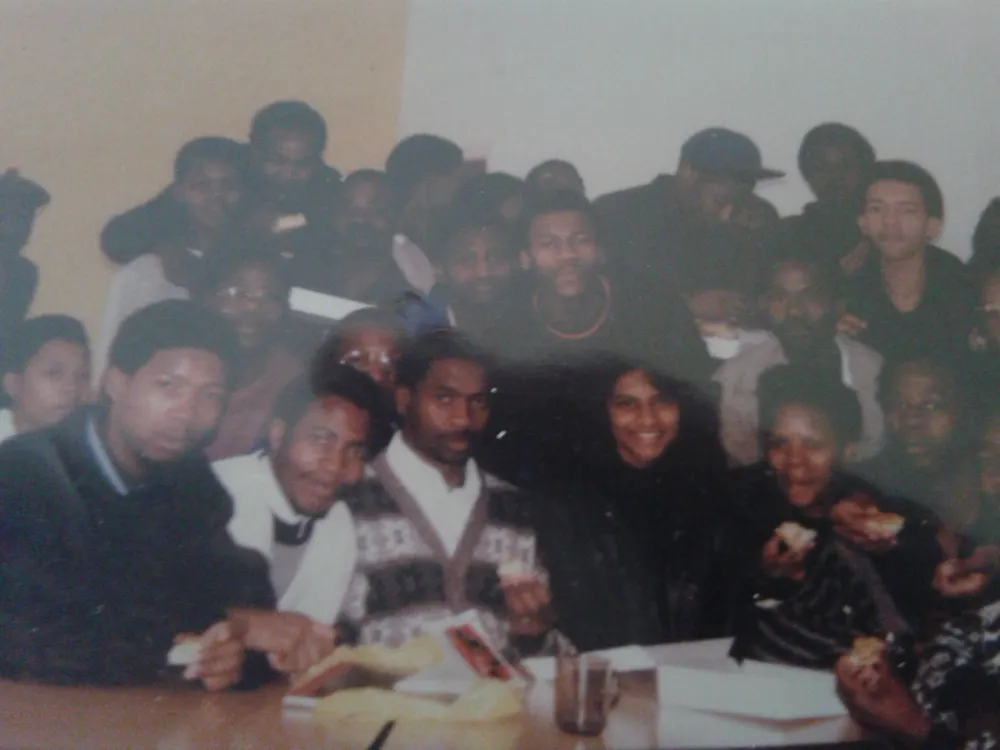
Johannesburg — Former students and staff of Khanya College gathered for an alumni meeting aimed at rebuilding connections and reflecting on the institution’s legacy as it approaches its 40th anniversary.
The meeting brought together alumni from the late 1980s and early 1990s alongside current staff and a board representative, Dr Mondli Hlatshwayo.
Others present at the meeting were Khanya Projects Coordinator, Nosipho Mdletshe, staff members Siyabonga Mviko and Viwe Mazwana, and former students Ramoatse Masiza, Zodwa Latola (née Binda), Nume Mashinini, Phumla Mashai, Wits lecturer, Dr Kgafela Oa Magogodi, and Kgora Motoagae. Khanya Director Dr Maria Van Driel sent apologies.
Participants introduced themselves and shared their links to the institution. Several alumni recalled studying at Khanya during the late 1980s in Cape Town, a time when the organisation offered political education and skills training to activists.
Latola, who now runs the Break Through Centre in Zonkizizwe, Katlehong, informed the meeting that her organisation works with children and young people affected by HIV/AIDS and also does advocacy work in the community. Mashai, another former student from the 1988 cohort, is now a professional nurse at Alexandra Community Health Centre. Mashinini, who studied at Khanya in 1989, is now a published author.
Mdletshe outlined how Khanya’s work has evolved over the years.
She said the organisation had moved away from a mainly academic focus, reorienting to working directly with organisations rooted in working class communities, “where the working class can be found”.
“Our orientation is to work with the primary organisations of the working class,” she said. “We do not do advocacy. Instead, we build reading and writing skills so that people can organise and struggle for themselves.”
Among the current programmes is the Poetry Buddies project, which organises children in orphaned and vulnerable communities. Khanya helps them develop reading and writing skills, complementing basic support services often limited to food assistance.
The College also works with a youth group known as Tsohang Batjha, where similar literacy and educational activities take place.
A community health project has also grown out of Khanya’s earlier home-based care initiative. The initial project ended after participation from community health workers declined, as many secured permanent employment in the public health system.
“We had hoped to train them as community health activists,” Mdletshe explained. “But once they became permanent employees of the health department, many stopped attending meetings.”
Khanya staff also briefed the meeting on their ongoing intellectual and cultural work.
Mviko explained the role of Karibu, the organisation’s publication, which trains community journalists and publishes working class perspectives. Mazwana, who had also spoken about the Karibu project, explained about Khanya’s study groups, where activists read and discuss political texts.
Mdletshe also introduced Bathekgi ba Khanya, a book club and membership initiative aimed at keeping former students and supporters connected to the organisation while helping Khanya to achieve self-sufficiency.
The initiative allows members to purchase books at discounted prices while also building partnerships with publishers and cultural institutions such as the Market Theatre.
“Bathekgi was meant to keep us in touch with everyone who has been part of Khanya,” Mdletshe said. “It is also a way to build relationships with cultural spaces.”
Alumni reflections
During a discussion session, alumni reflected on the atmosphere at Khanya during the late apartheid years.
Lecturer and theatre practitioner Kgafela Oa Magogodi, who studied at the college in 1993, described the institution as a rare space for political and intellectual development.
“It was a dark time for black people, then came this light called Khanya College,” he said. “Students were blessed with a free education. They were trained to be confident and to articulate themselves.”
Magogodi also stressed the importance of recognising the role of Khanya founder James Kilgore in telling the organisation’s history.
Mdletshe said the organisation currently does not have a dedicated budget for the anniversary events, although alumni are encouraged to propose ideas and assist where possible.
“We want the alumni themselves to host activities and shape the celebration,” she said.
Khanya is also involved in the Defend Public Spaces Campaign, which emerged after the City of Johannesburg attempted to evict the organisation from its premises at the Workers Museum precinct in Newtown.
Although Khanya occupies only one building on the site, the campaign has proposed that the organisation act as a custodian for the broader Workers Museum space.
Looking ahead
Participants proposed several steps to strengthen alumni participation.
One suggestion was to organise alumni into “detachments” based on the years they attended Khanya, with individuals responsible for reconnecting with former classmates.
Another idea was to develop a theatre production about the history of Khanya and its founder, potentially involving young performers linked to the organisation.
The meeting also discussed the possibility of linking cultural initiatives such as Magogodi’s Ndofaya street performance platform with Khanya’s anniversary programme.
Organisers said the next alumni meeting would take place within the next month, although a date has yet to be confirmed.
In the meantime, alumni were encouraged to reconnect with the organisation through Bathekgi membership and to contribute their memories and stories to Khanya’s publications as the anniversary year unfolds.
This article was submitted on 09 March 2026. You may republish this article, so long as you credit the authors and Karibu! Online (www.Karibu.org.za), and do not change the text. Please include a link back to the original article.

