
 Download PDF
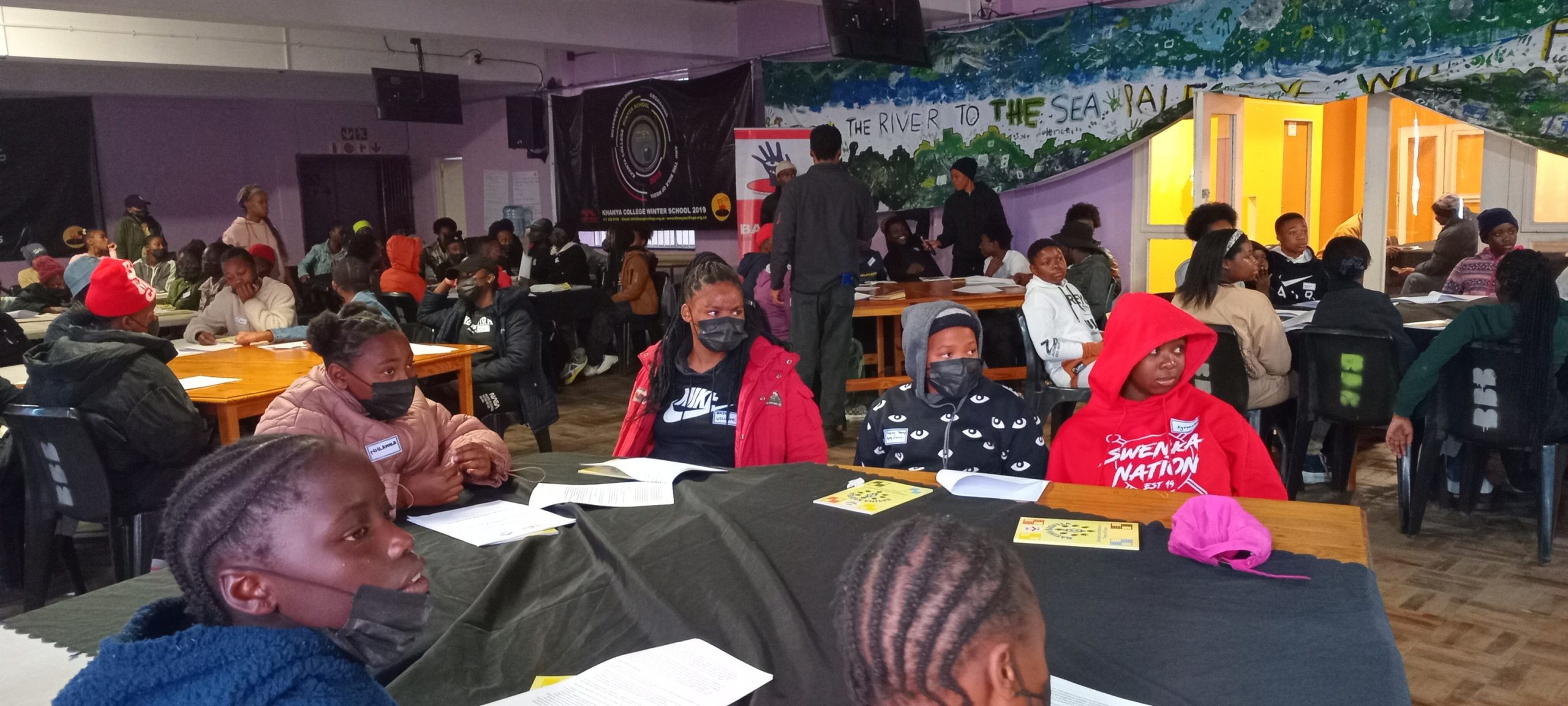
Study groups have long been a staple feature of Khanya College activities, with organisations and activists working closely and consistently with Khanya over the years. Having covered a number of critical readings last year, the sessions are due to resume this Thursday, 29 January 2026. The study group meetings happen in the evenings, a time when participants have presumably settled and are done doing housework in the home, making it easier for them to engage meaningfully.
“The study group is a space for activists and community members to read together, and debate current issues.” Through WhatsApp, discussions are held and actively facilitated by one or more Khanya staff members. Studying in a group is a well-established, popular education method that can both aid and complement the formal curriculum. Precisely because these spaces are non-formal, they remain flexible, accessible, and responsive, allowing them to cover a wide range of topics. Because of this flexibility, the Khanya study groups have addressed issues ranging from current news affairs in education, politics, and teenage pregnancy, to longer-term political ideas, including understanding international struggles such as what is happening in Palestine, Sudan, the Democratic Republic of Congo, and, more recently, Venezuela.
Locally, the study group sessions have produced concrete successes that help build solidarity and deepen understanding of the challenges other people face. For example, during a session focusing on (mostly) migrants trapped underground, and the realities of mining known as zama zama mining, some participants started off agreeing with Minister in the Presidency, Khumbudzo Ntshavheni, who had called for the miners to be ‘smoked out’. After a session of collective reading, structured discussions, and robust debates, many participants reported having gained new insights and changing their position about ‘smoking them out’.
With debates, rigorous study, and minimum hour-long sessions forming the backbone of the programme, for this year, it was important to seek comments from members to find out about any changes that may be needed. In this vein, one member of the study group, Sinalo Peyi, said, “I think that the study group is okay as is, because the books we read teach us about leadership skills and being problem-solving activists, so the community may rely on how we are equipped by Khanya.”
A key highlight of the study group included a session with the renowned Tanzanian scholar and heavyweight intellectual, Professor Issa Shivji. The large meeting and session took place during Professor Shivji’s fresh launch of the now 50-year-old classic, Class Struggles in Tanzania, which generated rich discussion.
For upcoming sessions, there is an exciting range of readings that have been prepared for study and close dissection by the participants. For tomorrow, the session will involve a much-anticipated discussion of the January (2026) edition of the Baithuti Educational Supplement, a republication of former Khanya Director, Cde Oupa Lehulere (Title: Capitalism, Imperialism and War).
In light of the US invasion of Venezuela, we will read Imperialism, Globalisation, and the War on Iraq by Cde Oupa Lehulere, to help us make sense of the major events shaping the world today.
This article was submitted on 28 January 2026. You may republish this article, so long as you credit the authors and Karibu! Online (www.Karibu.org.za), and do not change the text. Please include a link back to the original article.

