 Download PDF
“But almost a year later, an important question remains: has anything really changed for women and girls in South Africa? Are they safer? Are more survivors getting help and justice?”
In September 2026, South African media reported widely on the possibility of a serial killer operating in the Kempton Park area of Ekurhuleni. This followed the discovery of several women’s bodies in and around the area. Because some of the deaths appeared to have similarities, there were concerns that they could be linked. Well-known serial killer expert Dr Micki Pistorius shared her views on the possible connections. However, the police warned that it was too early to say whether a serial killer was responsible.
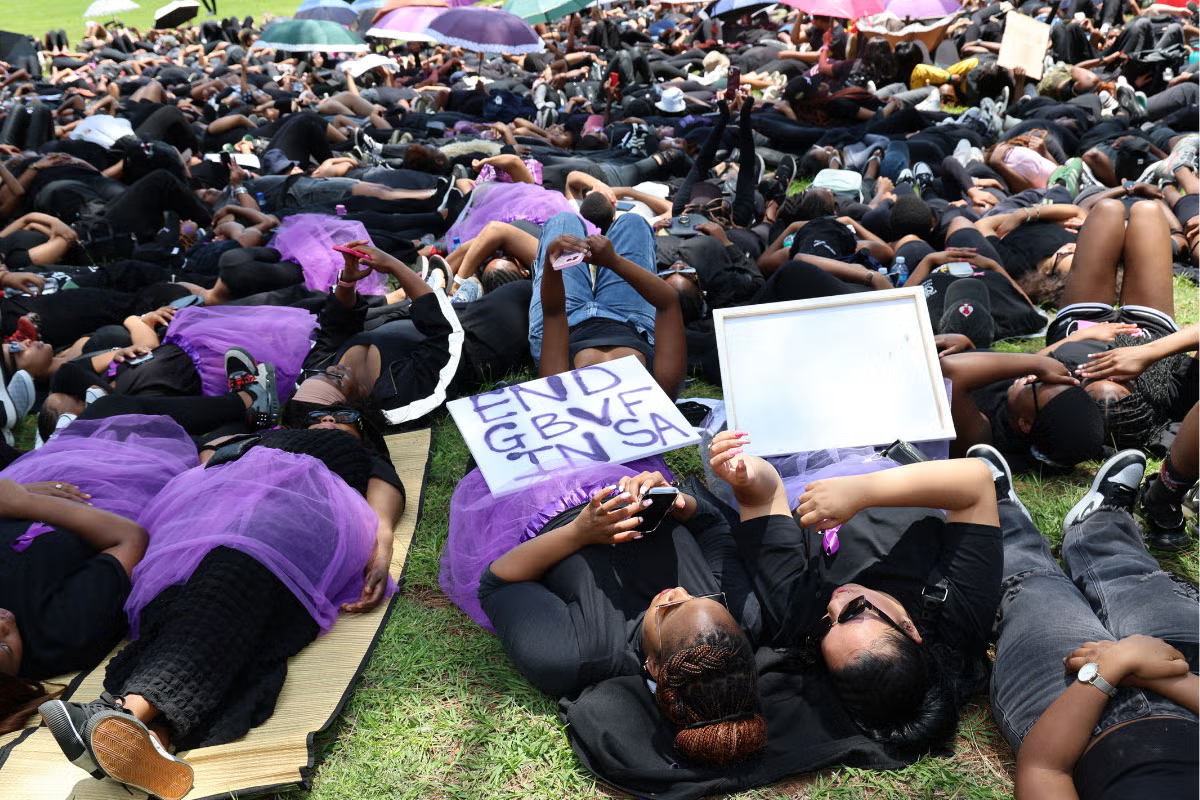
The discovery of the bodies caused public anger and fear. Many people began asking whether women were safe in South Africa and what was being done to protect them.
In November 2025, President Cyril Ramaphosa’s government declared Gender-Based Violence and Femicide (GBVF) a national disaster.
In a statement dated 8 December 2025, the President said: “At the height of the COVID-19 pandemic, I characterised violence against women as a second pandemic. But its impacts are arguably even more corrosive. Gender-based violence destroys families, has an economic cost, causes instability and fear for women and girls, and reproduces inter-generational trauma.”
But almost a year later, an important question remains: has anything really changed for women and girls in South Africa? Are they safer? Are more survivors getting help and justice? Or was the declaration just another government announcement?
Declaring GBVF a national disaster was supposed to make government take stronger action. It meant that the national government had to lead the response and make sure that different departments worked together to deal with the problem.
Some of the planned actions included opening more Thuthuzela Care Centres, improving the work of courts dealing with sexual offences and providing better support to survivors of violence.
For many years, organisations and activists have called for a permanent body that would make sure government and other sectors are doing what they promised to do.
Government has also reported progress in arrests and convictions. Between April 2024 and March 2025, specialised police units dealing with family violence, child protection and sexual offences arrested 22,219 suspects. They also helped secure 2,941 convictions for crimes involving GBV, murder of women, sexual offences and crimes against children. There are 176 of these specialised police units across the country.
Thuthuzela Care Centres reported a conviction rate of 79.2% and provided assistance to 46,301 victims.
These figures show that some survivors are receiving help and that the justice system is managing to secure convictions.
However, these improvements must be looked at alongside the large number of women who continue to experience violence.
According to the South African Police Service (SAPS) Annual Report for 2024/25, reported contact crimes against women increased by 0.52%, from 202,633 to 203,692 cases. These crimes included 3,381 murders and 29,108 sexual offences against women aged 18 and older. Cases of attempted murder and assault also increased.
The report also shows that many cases are not being resolved. The number of unresolved cases involving contact crimes against women increased from 40,268 to 46,112. This means that thousands more cases were left without a resolution.
The number of cases waiting to be dealt with in court also increased by 9.81%, from 123,518 to 135,637.
Although the overall conviction rate for contact crimes against women improved slightly to 83.45%, the conviction rate for sexual offences dropped slightly, from 74.95% to 74.78%. The rate at which police identified suspects in murder cases involving women also fell, from 16.96% to 15.58%.
These figures raise serious questions about how much progress is really being made.
Arresting more suspects and securing convictions are important, but they do not automatically mean that women are safer. There is a big difference between arresting someone after a crime has happened, getting that person convicted in court, and preventing the crime from happening in the first place.
Government has also recognised that passing laws is not enough to stop GBVF. Changes to the Domestic Violence Act and other laws have strengthened the protection available to survivors. They have also widened the types of abuse covered by the law and introduced stricter rules around bail in certain cases.
But these laws only make a difference if they are properly followed. Police officers must take complaints seriously, investigations must be done properly, and courts must deal with cases without unnecessary delays.
The problem is therefore not simply that South Africa does not have enough laws or government policies. The bigger question is whether these promises are making a real difference in people’s lives.
Women are still being abused and attacked in their homes, neighbourhoods and public spaces. Many survivors find it difficult to report abuse, get assistance or take their cases through the courts. Long investigations and court delays can also make victims lose hope and give up on seeking justice.
Declaring GBVF a national disaster should not be another government announcement that receives attention for a few weeks before people move on to the next big story.
It requires continued action, enough money and resources, programmes that prevent violence and consequences for government departments and officials who fail to do their work.
Almost a year later, South Africans need more than speeches, awareness campaigns and reports about arrests. They need to see fewer women being murdered, fewer cases of abuse, quicker justice and better protection in their communities.
If GBV is truly a national disaster, the government must treat it as one. Women should not have to wait for another shocking discovery or public outcry before their safety becomes a priority.
This article is an opinion piece submitted on 17 November 2026. The views expressed by the author do not necessarily reflect those of Karibu! Online or Khanya College. You may republish this article, so long as you credit the authors and Karibu! Online (www.Karibu.org.za), and do not change the text. Please include a link back to the original article.