 Download PDF
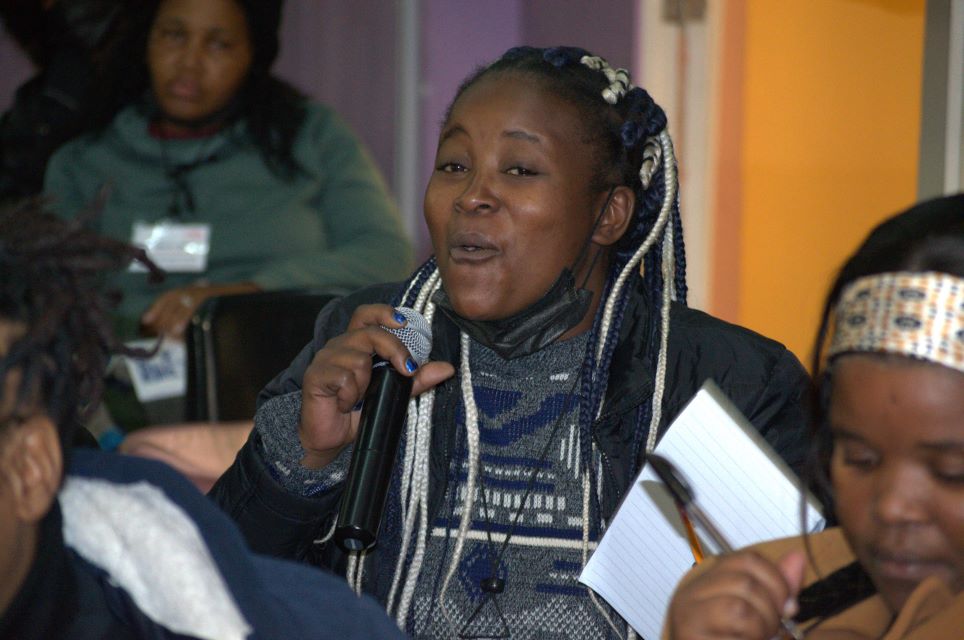
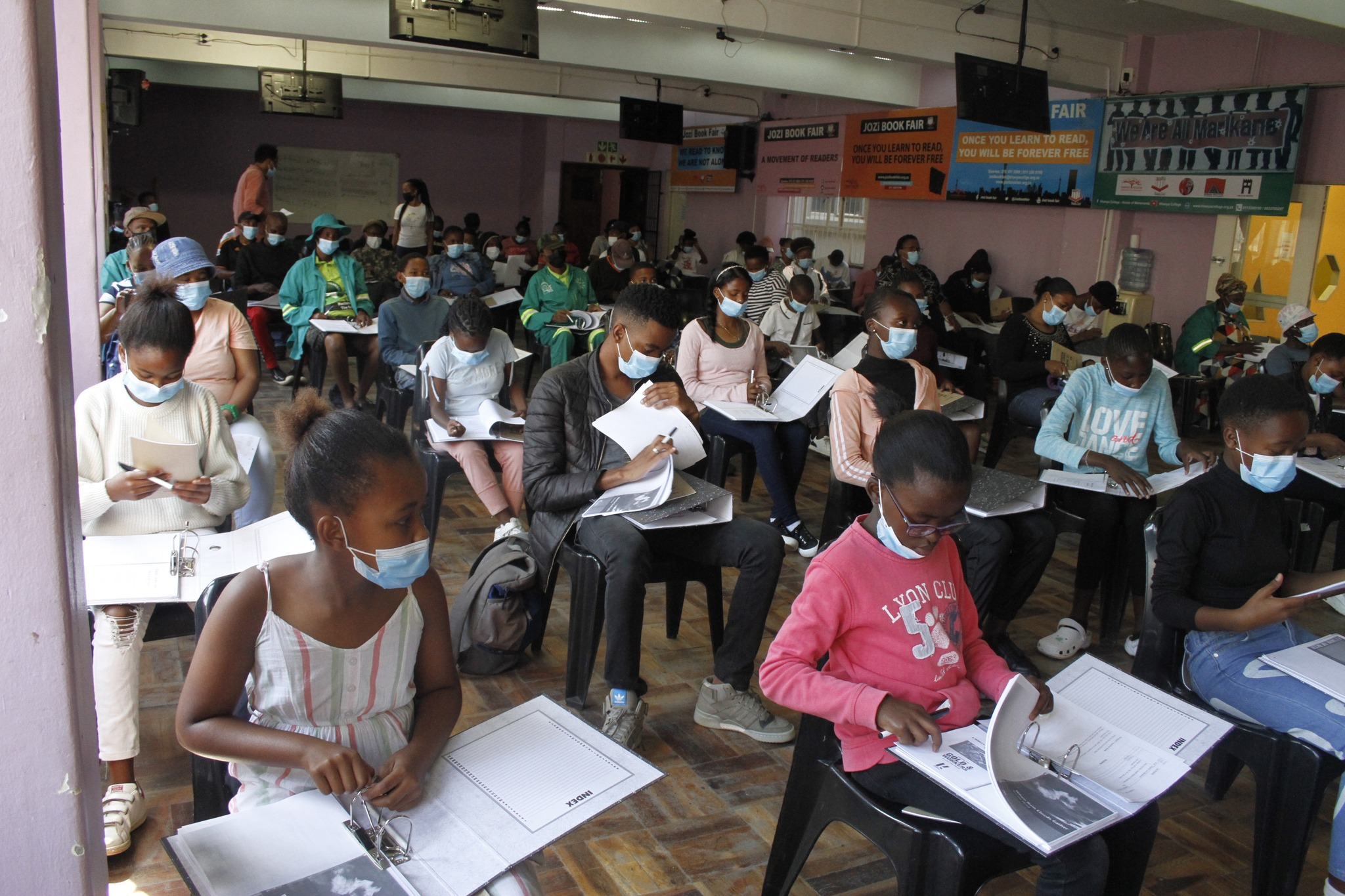
The Khanya College Winter School begins 15 June this year. On Monday, 16 June the official opening will be held at the House of Movements. The 26th winter school precedes an important moment for Khanya College which looks to evaluation its work, together with its constituencies. The winter school features the majority women’s participation. The participants themselves come from around Gauteng but also as far afield as the Eastern Cape, KwaZulu-Natal, Free State, North West.
The house rules and the sexual harassment policy used at the winter school are binding but not paralysing, allowing maximum respect, freedom of expression for comrades, thus enabling the strong participation without fear of reprisal. The sexual harassment policy does not exempt anyone at the school, whether they be board members or members of organisations without big roles.
Participants at the school will be free whether they are from outside South Africa, have a different sexual orientation to ‘straight’ (in other words, heterosexual) people. The policy stands against xenophobia, undue discriminations of all kinds, it also condemns sexual harassment.
Sexual harassment is not only in physical form, but it can also take place as speech or as unwanted attention, invasive stares and other such rude and hurtful gestures.
According to its official document, Khanya College’s sexual harassment policy defines sexual harassment as unwanted sexual attention or persistent abusive behaviour, including implied or explicit promises of rewards for complying with sexual requests, as well as threats or actual harassment for refusing such demands. Additionally, homophobic language is strictly prohibited at Khanya College.
All participants receive a copy of the full policy statement, which outlines the procedures to follow in the unfortunate event of sexual harassment. Ignorance of the policy will not be accepted as an excuse, and the College will impose the maximum penalty on anyone found guilty of such offenses.
Participants must also adhere to a set of house rules designed to ensure the smooth operation of the school within its limited timeframe. These rules not only shape the College’s approach to gender issues and resource management for supporting organisations but also help eliminate negative behaviours within the school environment. Over the years, participants have contributed to the development of these rules, so they are ours collectively.
Some of the key principles promoted include democracy, accountability, and a zero-tolerance stance on divisive or discriminatory behaviour. Other rules are in place to ensure participants’ safety while in Johannesburg. For example, the accommodation cannot be used for drinking parties, and participants are discouraged from walking alone in the city or exploring the streets unaccompanied.
Additional guidelines focus on the expected conduct of activists during the programme, ensuring that time is used effectively and that a productive learning environment is maintained. These rules foster meaningful discussions, encourage reading, and facilitate networking among participants.
The College hopes for a disruption-free school experience, where comrades can learn, share knowledge, and leave a lasting positive impact.
This article was submitted as part of the Imbila Yesu publication produced daily for the duration of the Winter School in 2025 (15-19 June 2025). It appeared in Edition 1, released on 15 June 2025. You may republish this article, so long as you credit the author and Karibu! Online (www.Karibu.org.za), and do not change the text. Please include a link back to the original article.