 Download PDF
Over the past two weeks, the recurring demand that artists, particularly those in mainstream entertainment and sport, remain “apolitical” has once again made headlines. This time, the spotlight fell on renowned Indian author Arundhati Roy, who was scheduled to attend this year’s Berlin International Film Festival (Berlinale). Roy withdrew from the festival following comments made on 12 February 2026 by its chief juror, Wim Wenders.
At the opening of the 76th edition of the Berlinale, Wenders argued that filmmakers could not remake the world “in a political way,” advising them to stay out of politics. If films become explicitly political, he suggested, filmmakers enter the terrain of politicians. Artists, in his view, are meant to serve as a “counterweight” to politics rather than participate in it.
Roy rejected this distinction. She characterised such remarks as an attempt to discourage filmmakers from speaking about Gaza and criticising Israel’s actions. Her withdrawal was framed not as a personal grievance but as a political stance expressing solidarity with the people of Palestine.
The controversy raises a broader and enduring question: can art ever truly be separated from politics? And locally, why do so many South African artists appear reluctant to engage publicly with the pressing social crises facing the country today?
Film is rarely free of political meaning, even when it avoids explicit references to governments, parties, or elections. Cinema is a powerful form of mass communication that shapes how societies imagine themselves. Through narrative, symbolism, and representation, films help define what is normal, what is possible, and who belongs. To claim that film should exist outside politics assumes that politics is confined to parliaments and campaign speeches. Yet politics also resides in culture, in the stories a society tells about itself.
The Italian Marxist thinker Antonio Gramsci provides a useful lens. In his theory of cultural hegemony, Gramsci argued that power is sustained not by force alone but by consent. Dominant groups maintain control by shaping “common sense” — the taken-for-granted assumptions about morality, success, nationhood, and identity. Culture, education, and media are central to this process; they form the terrain upon which consciousness itself is constructed.
If this is so, then film cannot be politically neutral. The same applies to music, comedy, and other cultural forms. Whether consciously or not, cultural workers participate in shaping social consciousness. They may reproduce the existing order — normalising inequality, nationalism, or consumerism — or they may challenge it. Silence, too, plays a role in hegemony. When cultural workers decline to address injustice, dominant narratives remain undisturbed.
The call for artists and athletes to remain apolitical often presents itself as a defence of professionalism. Yet it is selective. Cultural workers are rarely told to remain silent when their speech aligns with dominant power structures. It is dissent, not neutrality, that provokes reprimand. The demand to “stick to art” or “stick to sport” functions less as a neutral principle than as a boundary policing the limits of acceptable discourse.
Gramsci distinguished between “traditional” and “organic” intellectuals. Traditional intellectuals present themselves as independent of social struggle, as if above politics. Organic intellectuals, by contrast, emerge from and align with particular social groups, articulating their experiences and aspirations. The question, then, is not whether cultural workers are political, but which politics they serve.
The history of cinema offers examples of filmmakers who understood culture as a site of struggle. Senegalese director Ousmane Sembène insisted that film was a tool for political education and collective awakening. For him, culture was not a decorative supplement to politics but one of its central battlegrounds. The same question can be asked of South Africa’s music industry today: is it educating, pacifying, or mobilising?
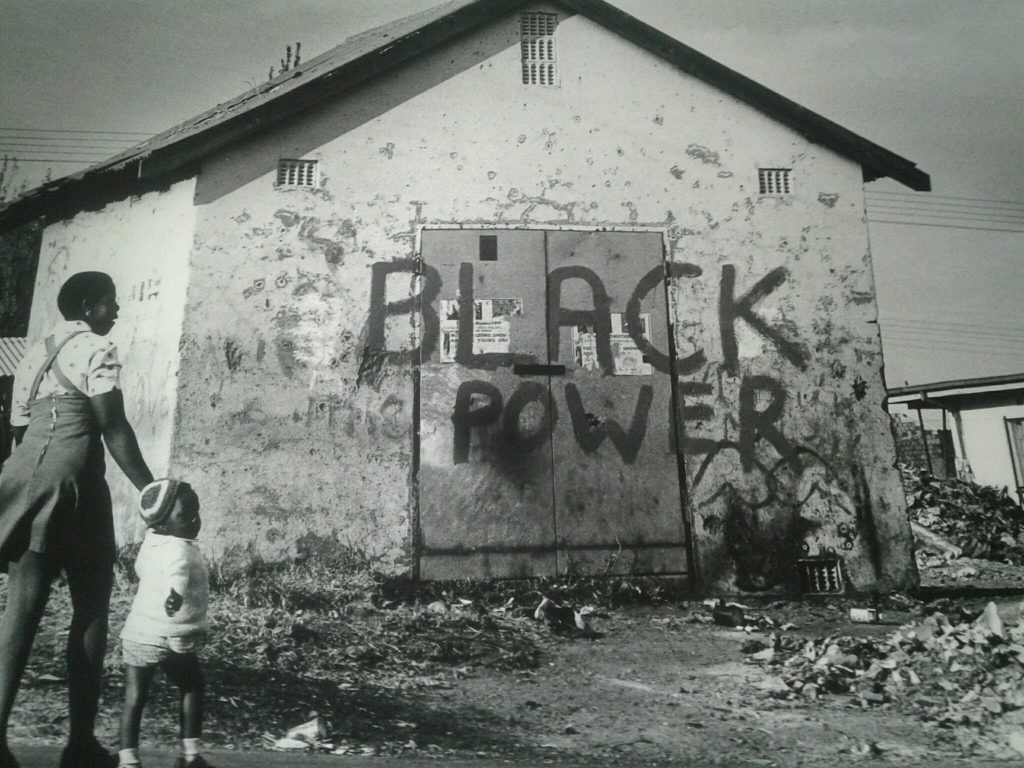
While some contemporary artists do raise pressing social issues, there is a noticeable contrast with the mobilising music of the anti-apartheid era. During that period, artists across genres spoke explicitly for the oppressed. Figures such as Hugh Masekela, Miriam Makeba, Johnny Clegg, Lucky Dube, and Brenda Fassie produced work that left little ambiguity about its political commitments. Likewise, poets such as Keorapetse Kgositsile, Mongane Wally Serote, James Matthews, and author Lauretta Ngcobo positioned culture firmly within the liberation struggle.
Today, political content in popular music often appears oblique, requiring deep interpretation to uncover its social meaning. The difference is not merely stylistic; it reflects a shift in the relationship between culture and collective struggle. The question remains: why does contemporary cultural production seem comparatively muted in a country still marked by inequality, unemployment, xenophobia, and persistent spatial injustice?
Even internationally celebrated figures are not immune to scrutiny. South African comedian Trevor Noah has been widely praised for his satire of former President Jacob Zuma. Yet observers note his relative restraint in addressing the current administration of President Cyril Ramaphosa or the structural realities of township poverty and service delivery crises. From a Sembènian perspective, one might ask whether such comedy interrogates institutions and systems, or whether it confines critique to personalities.
Wenders’ remarks, whether intentional or not, revive the illusion that art can float above material conflict. But in a world shaped by war, inequality, and displacement, cultural production inevitably intersects with power. To insist that artists remain outside politics is itself a political stance, one that risks reinforcing the status quo.
As Nina Simone once observed, an artist’s duty is to reflect the times. Culture shapes consciousness, and consciousness shapes action. In moments of national and global crisis, silence does not suspend politics. It participates in it.
This article is an opinion piece submitted on 23 February 2026. The views expressed by the author do not necessarily reflect those of Karibu! Online or Khanya College. You may republish this article, so long as you credit the authors and Karibu! Online (www.Karibu.org.za), and do not change the text. Please include a link back to the original article.